Parenting

  • The Other Side of Autism Awareness and Acceptance

    The Other Side of Autism Awareness and Acceptance

    As much as I want to shout from the rooftops that Autism Awareness and Acceptance Month needs to uplift and celebrate the voices of autistic folx who are working tirelessly to change how we talk about and support autistic people…

    I want to talk about how we – families raising autistic kids – support our kids, and the autistic advocates and mentors who are working tirelessly to raise awareness, acceptance, and ultimately access.

    How it started... it wasn't great

    C got his autism diagnosis in late 2011. 

    Before levels, and during a time when it was common to hear from supporting organizations that the path forward was to find the cause and cure to autism. 

    The internet was full of mom bloggers describing their grief and hope to unlock the puzzle that was their autistic child. 

    To have the normal child they planned for. 

    It was easy to identify with those moms. To see my story in theirs. To feel their grief and hope and buy into the notion that my child was broken – I broke my child – and it was my responsibility to fix him. 

    I think back on those early years… The violent meltdowns, no way to communicate with my child, the fear that our lives would be locked in those moments forever. 

    I didn’t have a role model showing me another way – until I sought one out. 

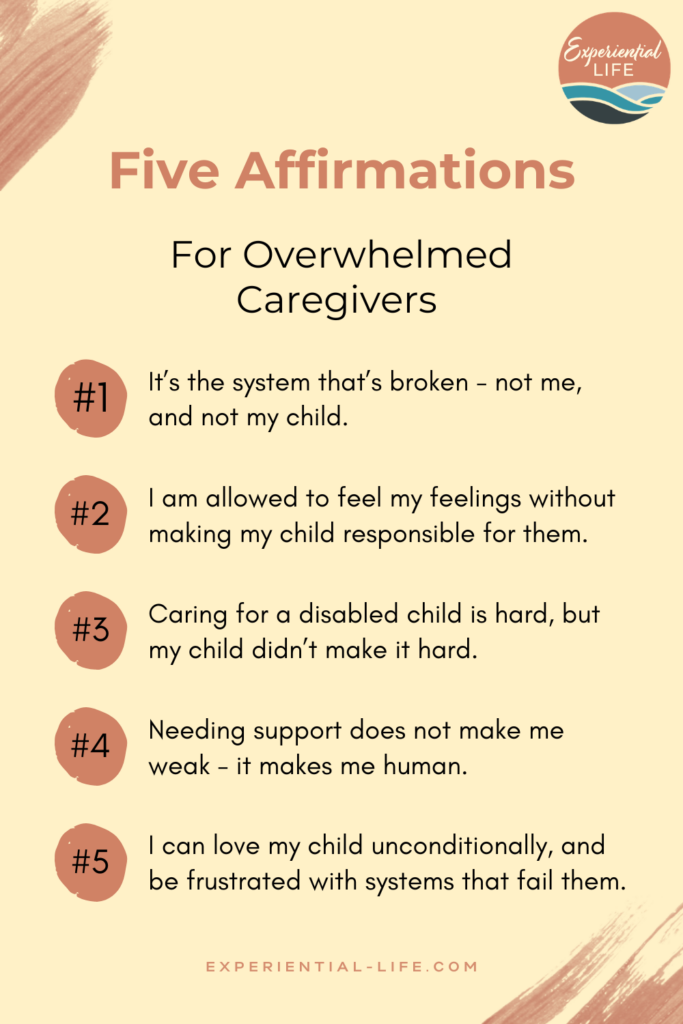
    Graphic reads: Five Affirmations for overwhelmed caregivers: 1. It's the system that's broken - not me and not my child. 2. I am allowed to feel my feelings without making my child responsible for them. 3. Caring for a disabled child is hard, but my child didn't make it hard. 4. Needing support does not make me weak, it makes me human. 5. I can love my child unconditionally, and be frustrated with systems that fail them.

    Listening to autistic and disabled adults changed my life and career.

    I would love to say that I started looking for a different path because I knew that how I thought and spoke about C traumatized him (and the rest of our family)…

    But I would be lying. 

    I sought something new because what we were doing wasn’t working and we were going deeper and deeper into debt trying to fix a child that wasn’t broken.

    And when you chase interventions that aren’t widely recognized by the medical community – medical insurance doesn’t cover those interventions. 

    Not because they are gatekeeping – because they aren’t evidence based. 

    We didn’t have the means (or the credit) to chase solutions that weren’t covered by insurance. 

    We needed help, desperately. 

    I found a few blogs by autistic adults – and they literally turned everything I thought I knew on its head. 

    AND – their solutions to the problems we faced didn’t require insane travel, testing, or expensive supplements and treatments.

    It literally just required me to change my mind about autism and how I see and care for my son. 

    👉 To stop seeing him as a problem and start seeing behaviors as communication. 

    👉 To look beyond the meltdowns and self-injurous behaviors and find the source of what was causing the distress. 

    In that moment, my life changed. 

    I learned just how valuable and necessary it is to stop centering my experience of my son’s autism and painting it with the broad “tragedy” strokes…

    And instead, center my son’s experience – his environment, his communication, his sensory needs and aversions – and use that experience to inform how we supported him.

    15 years later, and I am starting to see some of the old talking points resurface. 

    The rise of MAHA in mainstream is bringing back cause and cure rhetoric. 

    It’s why I felt it necessary to do my part to help uplift the voices of autistic people, who we often don’t hear from this Autism Awareness and Acceptance Month. 

    Autistics who:

    👉 don’t get a chance to share their story 

    👉 get misrepresented

    👉 have intersecting identities and lived experience.

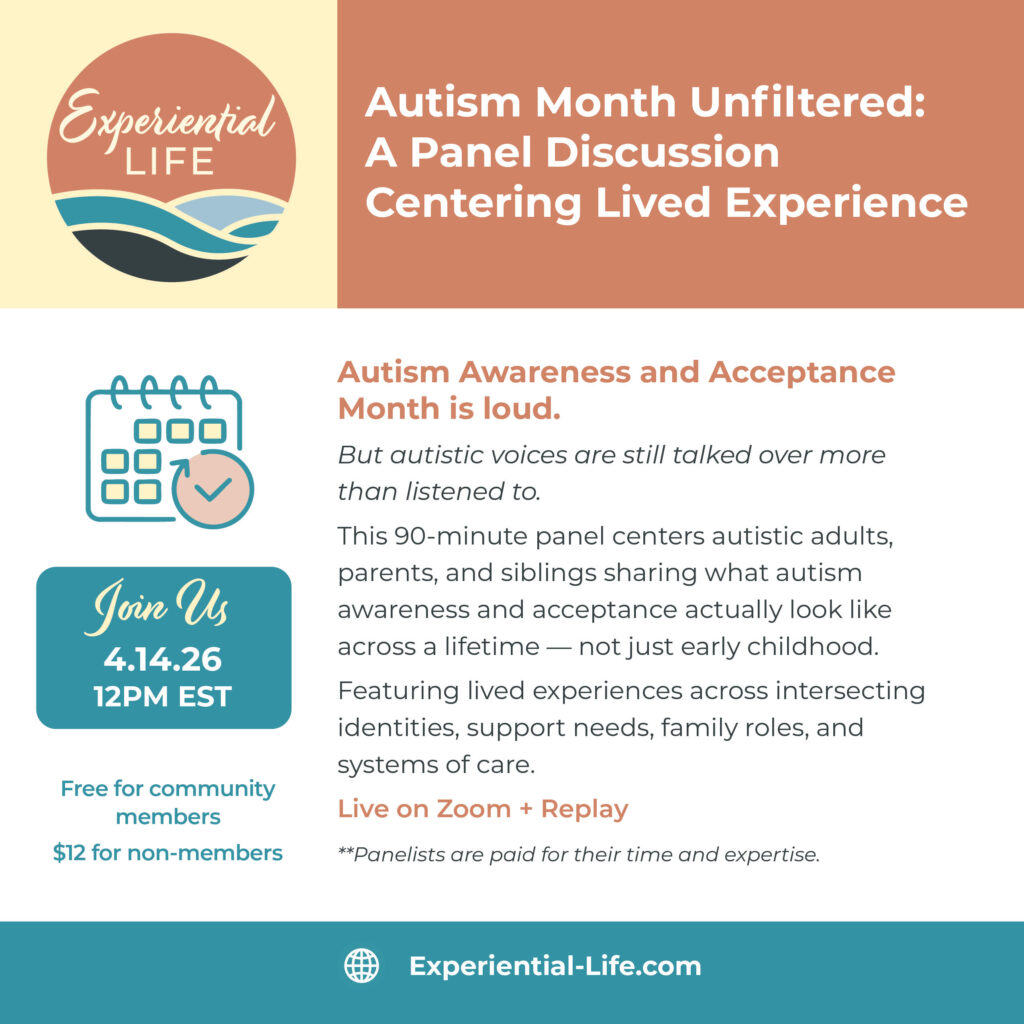
    Autism Unfiltered was born out of a deep desire to make sure that the rhetoric doesn’t drown out those who are advocating every day to make sure our children have full and autonomous lives and are treated with dignity and respect.

    Meet our panelists:

    Christine Motokane: Christine is an early diagnosed moderate support needs autistic woman. She was mainstreamed in a general education classroom environment and got her BA in Psychology. She has written two books: The first one is “Working the Double Shift: A Young Woman’s journey with Autism” and “The Revolving Door: The Untold Story of Disability Support”. Currently, Christine works as a substitute paraeducator and enjoys the flexible schedule. You can follow Christine on Instagram: @​TheJumpyAutist​.

    Alex Mock: Alex is a low support needs autistic woman who strives for equality no matter disability, race, gender etc. She works as a part time substitute teacher and DSP (Direct support professional). You can follow Alex on Instagram: @​unbri_dled_whimsy ​

    Dr. Destiny Huff: Dr. Destiny Huff is a non-attorney special education advocate, mental health therapist, late diagnosed AuDHD, and mom to two neurodivergent learners. Her mission is to support the mental health of disabled, neurodivergent, Autistic, and ADHD people. Those whose experiences are too often overlooked, misunderstood, or dismissed. You can follow Dr. Destiny Huff on Instagram: @​destinyhuff_iep_advocate​

    And we purposefully invited a sibling panelist – because their experience often gets overlooked. 

    Vincenté Parker: Vincenté is a triplet – his brother is autistic and his sister has complex medical healthcare needs. He is a video producer for a health care organization by day, and spends his time volunteering as the coach for the Irrational Engineers, a robotics team based out of Capitol Heights, MD. 

    Here are a few things I want you to know about this panel discussion:

    → Everyone who sits on the panel is getting paid. Often we ask disabled people to share their time, experience, and expertise – but we don’t offer compensation. It’s exploitative and unfair.

    → Because the panelists are paid, I am charging anyone not a member of Experiential Life $12 to attend and receive the recorded panel discussion. 

    → There will be time to answer questions at the end of the 90 minute event – but they must be submitted in advance. This gives our panelists time to think about their answer and respond in real time. 

    This event is open to anyone interested in hearing from the autistic community.

    This space belongs to them. Anyone who treats it otherwise will be asked to leave.

    I’m going to this conversation as a mom to an autistic teen that wants to hear directly from autistic people about how we can and should honor Autism Awareness and Acceptance Month. 

    If you are autistic, a family member, a caregiver, a provider, an advocate, or an ally – this is a conversation you don’t want to miss.

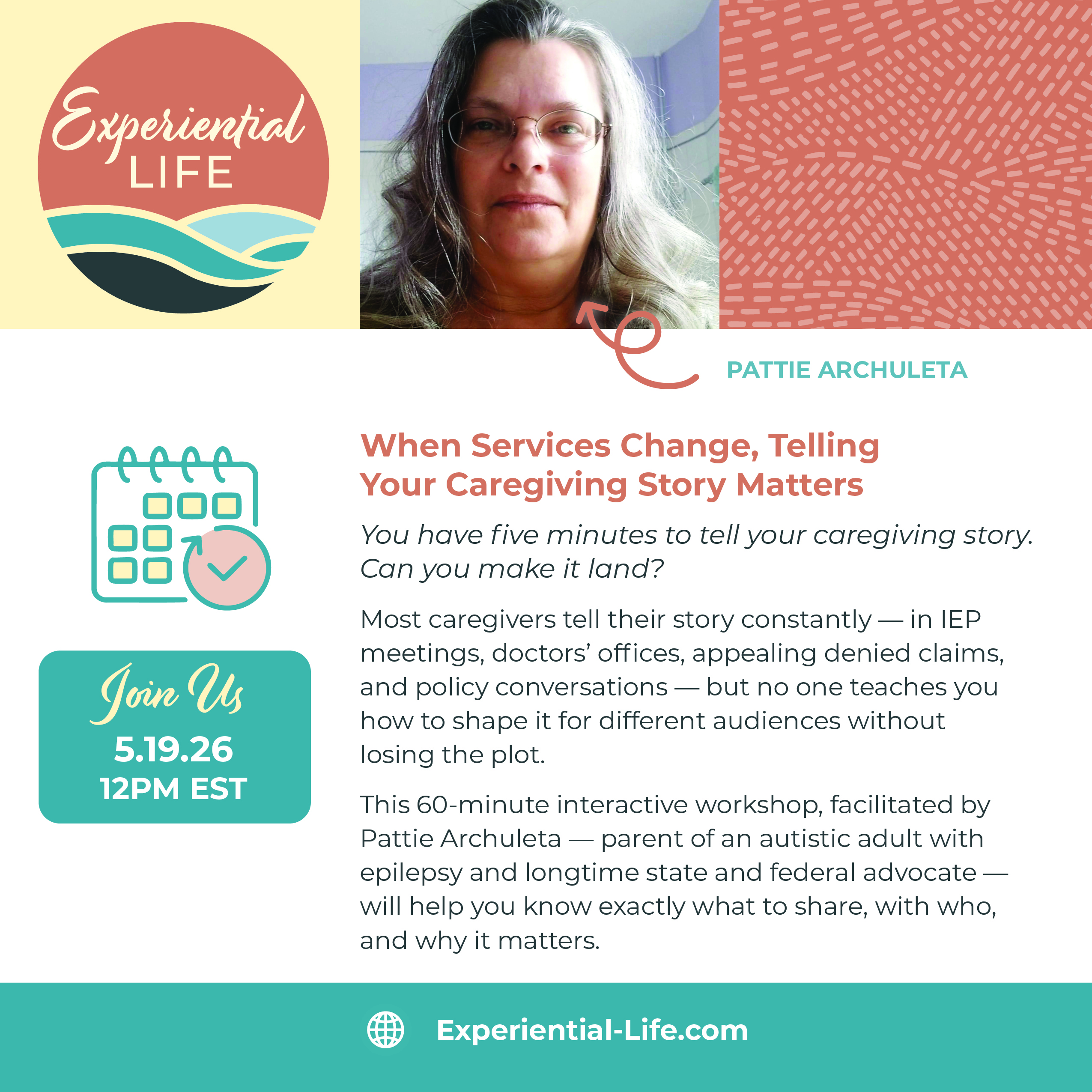
    🗓 April 14, 2026

    ⏰ 12pm EST

    📍 Live on Zoom

    Register now to join us live ⬇️

    All panelists are compensated for their time and expertise.

    AND, if any of this resonates, please share this article with your network and subscribe to our weekly newsletter ⬇︎ 

    I built the newsletter I wish I had when my son was diagnosed.

    I know firsthand how lonely it can be raising a neurodivergent kid, trying to survive systems that are supposed to support us, and feeling like I'm a step behind or missing something important.

    Every week, I show up in your inbox with information you need right now, events you won't want to miss, and conversations that are perfectly paired with your favorite beverage and snack.

    I don't claim to know all the answers - but I do know where to find them, who can answer them, and make sure you do too.

      Join the hundreds of families and professionals that open the email every week.

      We won't send you spam. Unsubscribe at any time.

    • ABLE to Save for My Disabled Son

      Will I Be ABLE To Save For My Disabled Son's Future?

      The $2,000 asset limit for people on Medicaid and SSI is real – it’s been real since 1989.

      And most families raising disabled kids don’t know how to begin saving – or if they can…

      I have a running list.

      Not a written one. The kind that lives in the back of your head and occasionally surfaces at 11pm when you’re trying to fall asleep.

      Open ABLE account for my son.

      It’s been on that list for a while.

      Not because I don’t know what it is. I do. Not because I don’t understand why it matters. I understand that too.

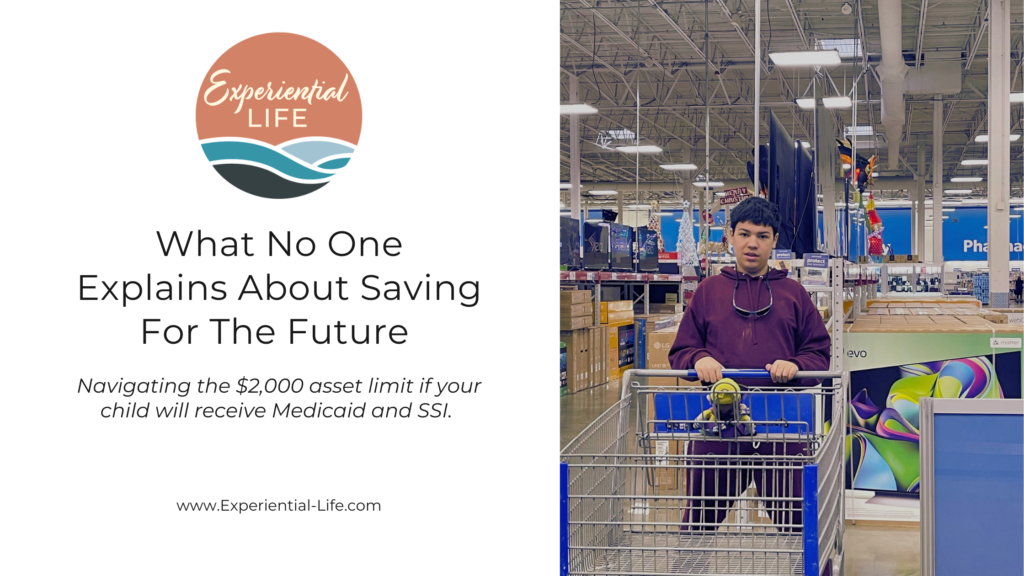
      Graphic reads: What no one tells you about saving for the future... Navigating the $2,000 asset limit if your child will receive Medicaid and SSI. To the right is a picture of C standing in line at a store. His hands are on a shopping cart and he is wearing a maroon sweatshirt and matching pants.

      It’s on the list because every time I get close to doing something about it, something else is more urgent.

      A specialist appointment. An insurance appeal. A benefits review. A phone call I’ve been putting off making – for months.

      And if I’m being fully honest – there’s another reason.

      I didn’t think I could actually afford to fund it.

      If you’re nodding right now, keep reading. Because I was wrong about that.

      And the conversation we’re having on March 31st is the one that finally showed me why.

      The Number Nobody Told Me About When My Son Was Diagnosed

      In 1989 – the year I was in second grade – the federal government set the asset limit for people receiving SSI at $2,000.

      It has not changed since.

      That means that saving for your disabled child is more complicated than it would be for a child who won’t need SSI or Medicaid benefits in the future…

      Because you can’t just open a savings account in your disabled child’s name.

      They cannot receive a gift or inheritance, over $2,000, in their name without risking their Medicaid, their SSI, and every support that depends on those benefits.

      No one told me this when my son got his diagnosis.

      I learned it by chance, the way you learn most things navigating disability systems – through conversations with other parents, through advocates, through sitting in enough rooms where people talked about money and benefits in the same breath.

      And when it finally landed – really landed – my first thought wasn’t panic.

      It was – how many families have no idea this is even a thing?

      The Account You Should Know About Before It Is Too Late

      The ABLE Act was signed into law in 2014.

      It created a tax-advantaged savings account – similar to a 529 for education – specifically for people with disabilities.

      Money in an ABLE account doesn’t count against the $2,000 SSI asset limit.

      It can be used for qualified disability expenses:

      ✔️ housing,

      ✔️ transportation,

      ✔️ education,

      ✔️ health,

      ✔️ basic living expenses

      As of this writing, eligible individuals can save up to $20,000 a year in an ABLE account.

      It doesn’t fix the policy. The $2,000 limit is still there, still unchanged, still one of the most quietly harmful rules in the disability system.

      But an ABLE account protects your child within it.

      What If I'm Not ABLE To Save?

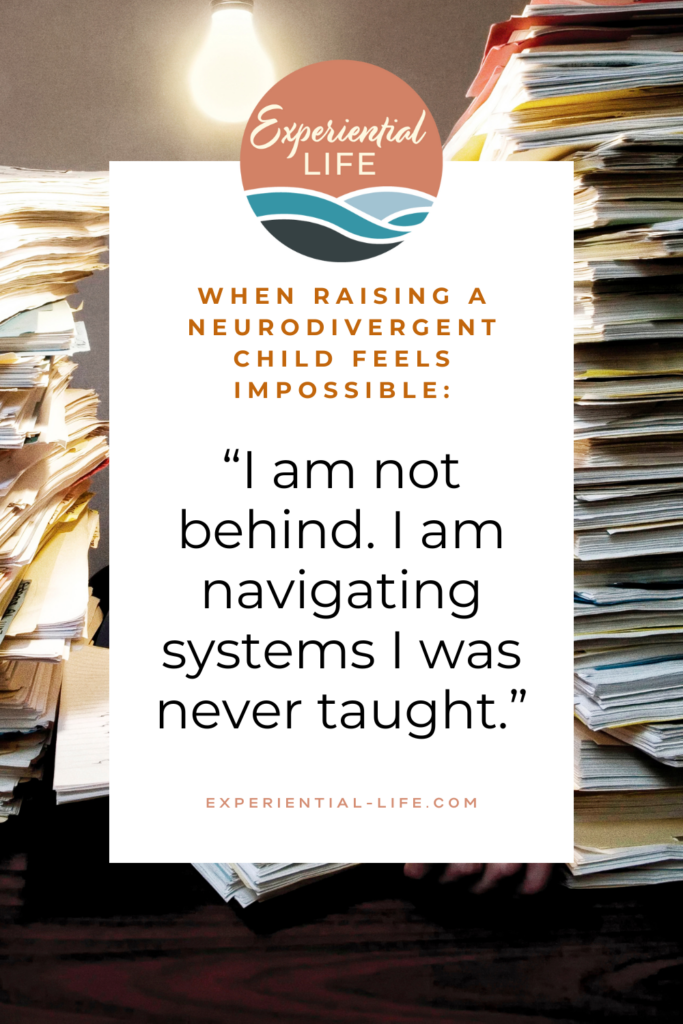
      A graphic with stacks of papers and file folders sit behind text that reads: You Are Already Spending money on your neurodivergent child... What if you put that money in an ABLE account first?

      Here’s the thing about being a healthcare and disability advocate who helps other families navigate systems for a living.

      You would think I’d have this handled.

      I would like to tell you that I do.

      I don’t.

      The honest answer has two parts.

      The first is bandwidth. Opening an ABLE account for my son has lived on my mental list the same way it lives on yours – not because it’s hard, not because I think it’s the wrong move, but because every time I get close, something more immediately on fire takes over.

      That’s the thing about future planning. The future is a problem for future you, until it isn’t.


      The second part is money. Or what I assumed about money.

      I don’t have a lot of disposable income. Most of what I have goes directly to my son’s expenses – therapies, co-pays, equipment, the recurring costs that don’t stop just because the month is almost over.

      The idea of finding additional money to put into a savings account, every month, reliably – it felt like one more impossible thing on an already impossible list.

      So I kept putting it off.

      And then I had a conversation with Kelly Nelson from Maryland ABLE that changed how I was thinking about it entirely.

      What I Got Wrong About How This Works

      I was thinking about an ABLE account like a traditional savings account. Something you fund with extra money you have left over at the end of the month.

      Most of us raising disabled kids don’t have that. And the people who designed ABLE knew that.

      Here’s what I didn’t understand until recently:

      You don’t have to fund it from new money.

      I’m already paying expenses for my son out of pocket every month. Recurring expenses – things I’m going to pay regardless. The ABLE account allows me to run those expenses through the account instead of directly out of my checking account. Same money. Different path.

      And in Maryland, contributions to an ABLE account qualify for a state tax deduction – so the money I’m already spending on his care starts working a little harder.

      Other people can contribute too.

      ABLE accounts have gifting pages. Not a GoFundMe with platform fees taking a cut.

      A dedicated page where family members, friends, and anyone who wants to support your child’s future can contribute directly to the account.

      → Birthdays.

      → Holidays.

      →Graduations.

      Instead of another toy or gift card, people who love your kid can contribute to something that actually builds over time.

      It covers more than you think.

      Basic living expenses. Housing. Transportation. Health. Education.

      And – I just learned this from Kelly directly – in Maryland, an Experiential Life membership qualifies as a covered expense under ABLE.

      Which means the app I built to help families navigate these exact systems can be funded through the account that protects your child’s benefits.

      I want to be clear: I didn’t build the app knowing this. Kelly told me during our prep call and I sat with it for a minute.

      Because that’s what good systems information does. It changes what’s possible.

      What We're Covering On March 31st

      I scheduled this conversation because I needed it.

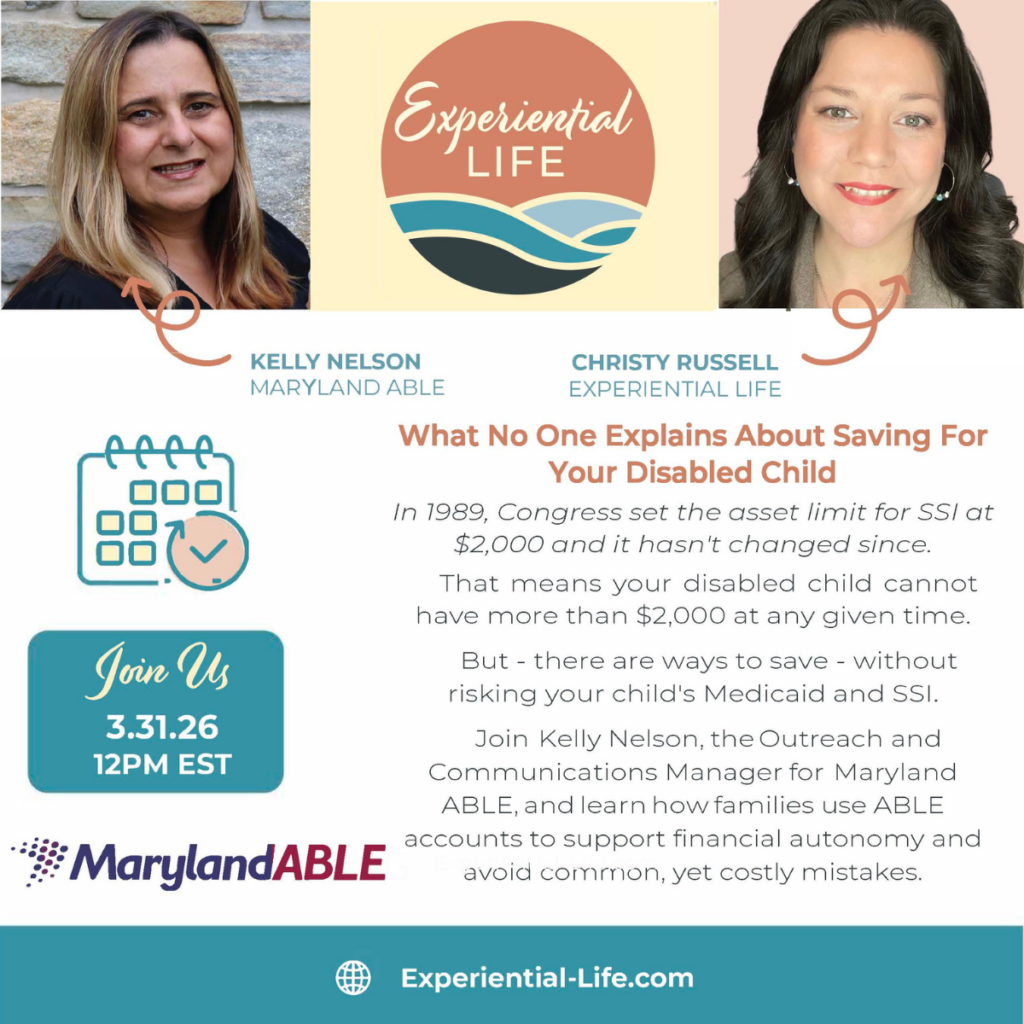
      Kelly Nelson, the program and outreach coordinator for Maryland ABLE, is coming into the Experiential Life community to walk us through exactly how ABLE accounts work.

      Not the pamphlet version. The version where you can ask your specific questions, about your child’s situation, changes to the federal rules, what happens if your child works or gets a gift or has savings you didn’t know were counted.

      🗓️ March 31, 2026 at 12pm EST
      📲 Replay included inside the Experiential Life App
      👉 Register here

      We’re covering:

      ✔️ How ABLE accounts work alongside SSI and Medicaid without triggering the asset limit

      ✔️ How to open one and what the process actually looks like

      ✔️ How to use recurring expenses you’re already paying to fund the account

      ✔️ How gifting pages work and how to set one up

      I’m going to this conversation as a mom who needs to finally do the thing I’ve been putting off – and who now understands why waiting wasn’t actually protecting my budget. It was just delaying the protection my son deserves.

      If you’re in the same place, come with me.

      AND, if any of this resonates, please share this with your network and subscribe to the newsletter to get instant access to future articles, weekly advocacy tips, exclusive event invites, and news you can use.
      Do you crave trustworthy information and resources to help you support your Neurodivergent child?

      Subscribe to the Experiential Life newsletter and get advocacy tips, exclusive event invites, and news you can use - delivered straight to your inbox.

        We won't send you spam. Unsubscribe at any time.
      • Why Planning For Your Disabled Child’s Future Isn’t A “Tomorrow Problem”

        Why Planning For Your Disabled Child’s Future Isn’t A “Tomorrow Problem”

        Waiver applications, benefits, and transition planning overwhelm families.

        And too few people explain how the systems actually work.

        I did exactly what every advocate and person that works for disability organizations told me to do…

        When my autistic son turned 14, I applied through my state’s developmental disabilities administration for the Home and Community Based Services Waiver (HCBS).

        ✔️ I downloaded the plain language user’s guide.

        ✔️ Gathered all the documents.

        ✔️ Made all the copies.

        ✔️ Mailed them with return receipt.

        And despite his higher support needs…

        He was denied eligibility.

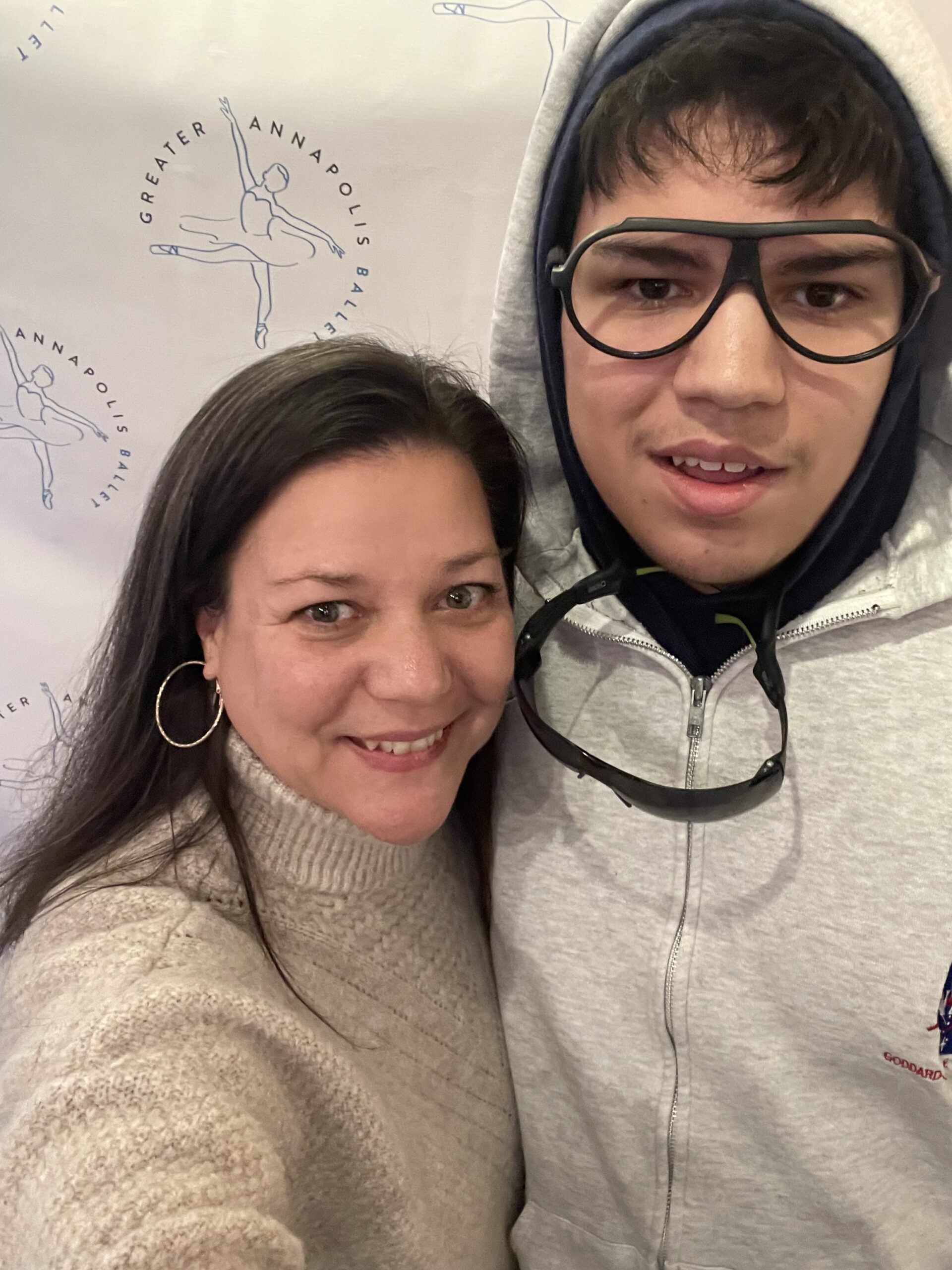
        Christy is a white woman wearing a beige sweater and her dark hair tucked behind her ears. She is standing to the left of her autistic teen, who is white, much taller, and wearing a grey zip hoodie. His hood is covering almost all of his dark brown hair and he is wearing black framed glasses. His sunglasses hang on a lanyard over his hoodie.

        One Acronym Cost Me Six Months

        The user’s guide said that a family could use their child’s IEP as proof of diagnosis.

        It turns out, they did not mean the IEP document – they meant the psychological assessment from the IEP evaluation.

        Silly me read IEP as stated and sent in the IEP – goals, parental input, and all.

        One unclear instruction turned into six months of going back and forth with the administration.

        And then it turned into years.

        Not because the process required years.

        But because I was so frustrated by the lack of clarity in the “plain language” guide that I delayed sending the psychological assessment they actually needed.

        When “Future Planning” Overwhelms Your System

        It just became too much.

        And that’s the thing with future planning, right?

        The future is a problem for future you – and you have today problems to solve

        Until the future is staring you in the face.

        Literally.

        Because your once forearm sized child is adult sized and can look you in the eyes without standing on their tiptoes.

        Or in my case…

        I am standing on tiptoes trying to look my autistic teen in the eyes.

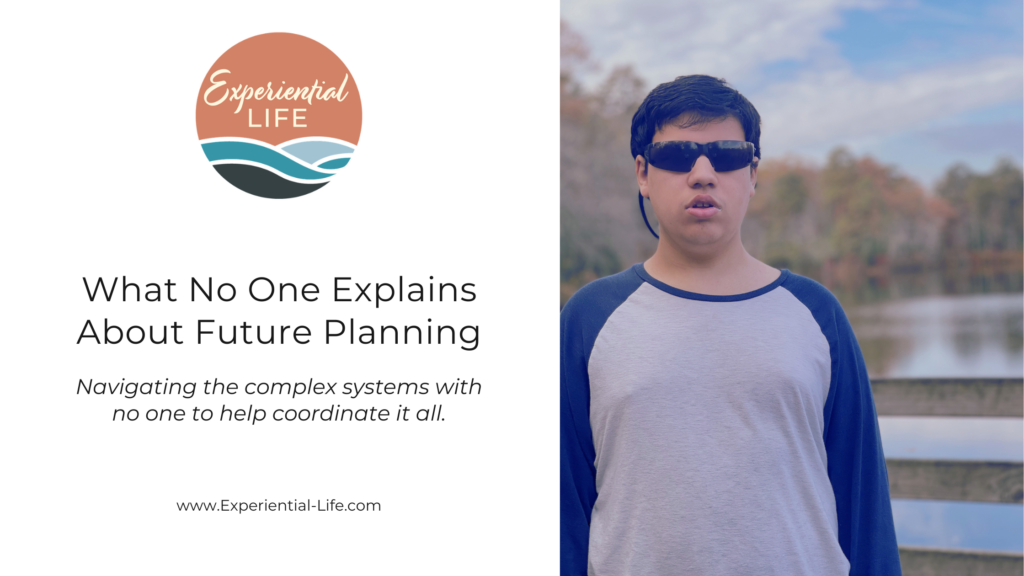
        Graphic Title Reads: What No One Explains About Future Planning: Navigating the complex systems with no one to help coordinate it all. Image of C - an autistic teen, standing in front of a wooden fence with a pond and fall foliage in the background. He is wearing a grey raglan shirt with blue sleeves. He has short brown hair and is wearing sunglasses.

        The Systems No One Coordinates Or Even Teaches

        Future planning is overwhelming. And even with a “transition coordinator” there is no one that coordinates it all. 

        There seem to be a million steps.

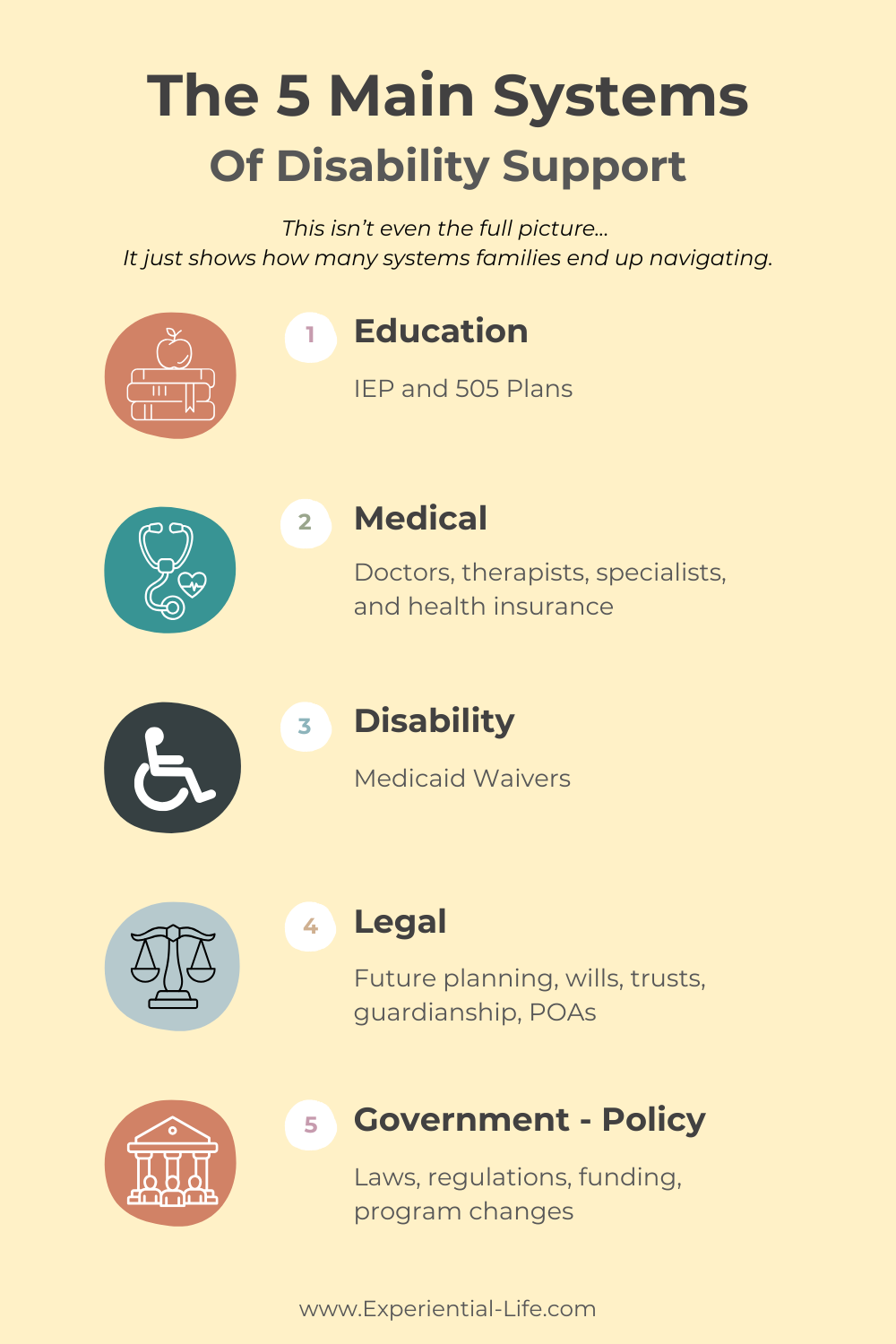
        A million systems you have to work with:

        → education

        → medical

        → disability

        → legal

        → government

        Infographic explaining the five main systems families navigate when raising a disabled child: education (IEP/504), medical care, disability services such as Medicaid waivers, legal planning like guardianship and trusts, and government policy.

        What Families Raising Neurodivergent Kids Need

        Most families are expected to figure out how these systems connect – on their own.

        But what families raising neurodivergent children really need is clarity.

        We need direction.

        And we need to know what to do – and when to do it.

        Especially if  your neurodivergent child is entering middle school or high school.

        Learning From People Who Have Been Here Before

        The good news?

        There is so much we can learn from the people who have already started or have gone through the process…

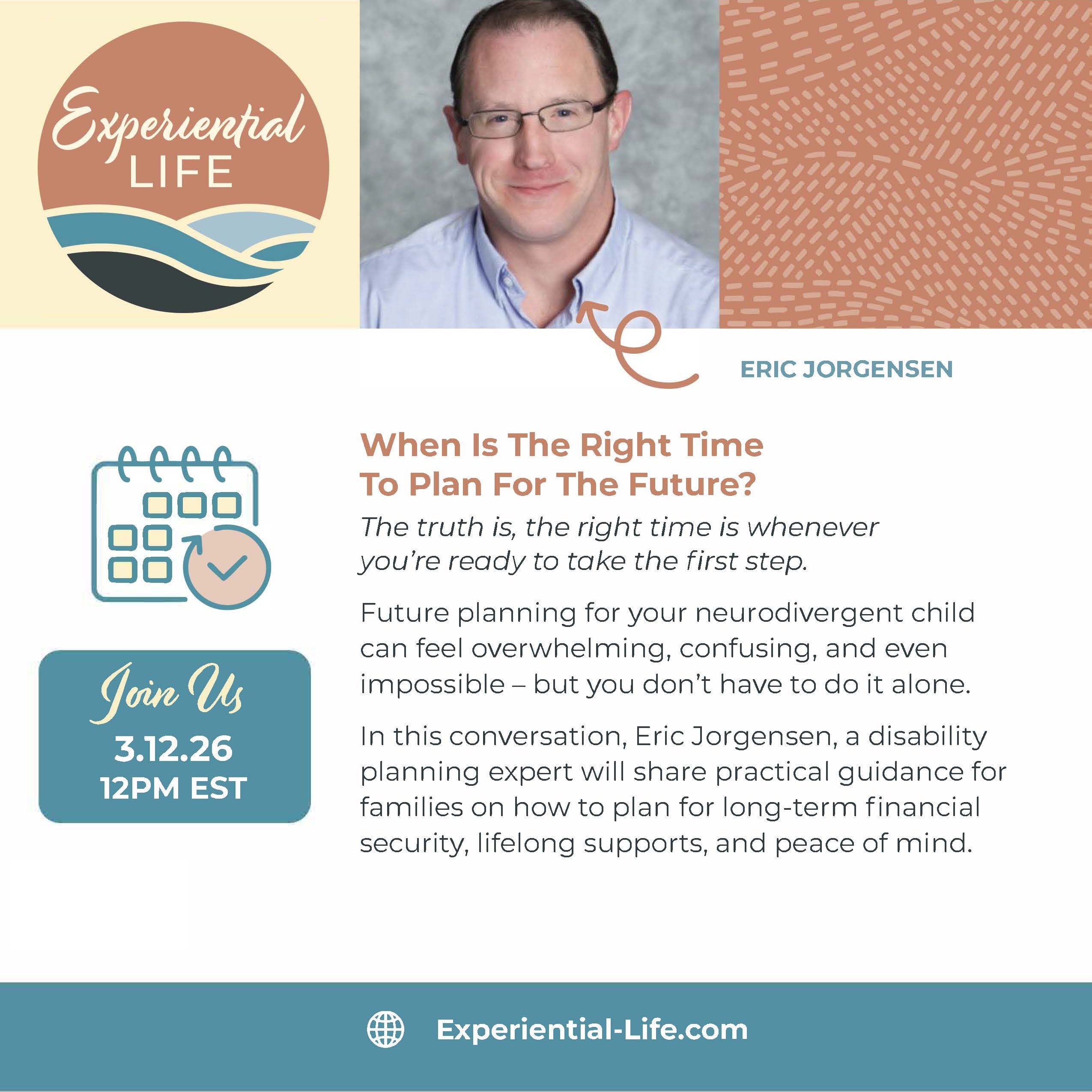
        And that’s why I am really excited about our upcoming conversation with Eric Jorgensen, former Director of Special Projects at First Maryland Disability Trust and parent of a disabled adult. 

        Eric will walk us through practical strategies for planning your child’s long-term financial and life supports – and answer your questions live.

        We’ll talk about:

        • When families should start future planning
        • The most common mistakes families make
        • Financial and legal considerations for long-term support
        • How to think about housing, benefits, and independence

        You can join us for free:

        🗓️ March 31, 2026

        ⏰ 12pm EST

        📍 Live on Zoom

        If you are staring the future in the eyes, but don’t know where to start, we scheduled this conversation for you.

        Bring the questions you’ve been carrying alone.

        The ones you don’t know who to ask.

        Just click the button below to join us ⬇️

        This is the conversation I wish I had – before my son turned 14. 

        If you’re not able to attend live, the replay lives inside the Experiential Life app.

        You can learn more here: https://experiential-life.com/experiential-life-app/

        AND, if any of this resonates, please share this with your network and subscribe to the newsletter to get instant access to future articles, weekly advocacy tips, exclusive event invites, and news you can use.
        Do you crave trustworthy information and resources to help you support your Neurodivergent child?

        Subscribe to the Experiential Life newsletter and get advocacy tips, exclusive event invites, and news you can use - delivered straight to your inbox.

          We won't send you spam. Unsubscribe at any time.
        • The Hidden Problem With Disability Resources

          The Hidden Problem With Disability Resources

          ($30,000 and a stack of referrals later)

          C is a white teenaged boy standing outside in the middle of a snow storm. He is wearing a winter hat and an orange and beige snow coat. There are trees covered in snow behind him.

          Yesterday, our little island was issued a blizzard warning… and it reminded me of the day the pediatrician said, “Christy, I think your son is autistic.”

          All those years ago, when the pediatrician dropped what felt like a bomb in my lap – we were ordered to evacuate because a hurricane was barreling toward us…  and it felt like some sort of sign from the universe.

          My brain screamed, “RUN” from all the chaos…

          And in answer to the chaos surrounding me, I got a stack of referrals and a few pamphlets… in the midst of “ways to prepare for the incoming storm.”

          Okay universe… I am paying attention.

          Why Families Feel Like They Are Failing

          That year, we spent $30,000 out of pocket seeing every specialist and therapist we got referred to. 

          I was juggling work, multiple appointments a week, two different schools, insurance calls, and two older kids with full lives of their own. 

          My husband was working nights. We were always in the car. Always coordinating. Always reacting.

          And I broke.

          Not because of my autistic son…

          But because I felt like I was alone, in the middle of the storm, with information being thrown at me – decisions to be made – and yet no real and meaningful support behind me.

          No one explained how the systems worked.

          No one translated the language.

          No one said, “This is hard to navigate… let me help.

          You Can’t Navigate What You Don’t Understand

          So I started asking.

          I sent cold emails. Made cold calls. Showed up to meetings. I wanted to know:

          ❓ What am I supposed to do?

          ❓ What do these acronyms and words actually mean?

          ❓ Is there help for the medical debt?

          ❓ How is anyone supposed to work 40 hours while caregiving 24/7?

          The answers to most of my questions existed – but they didn’t live where I expected to find them…

          They live in the heads of the people who work in the systems – which is bonkers!

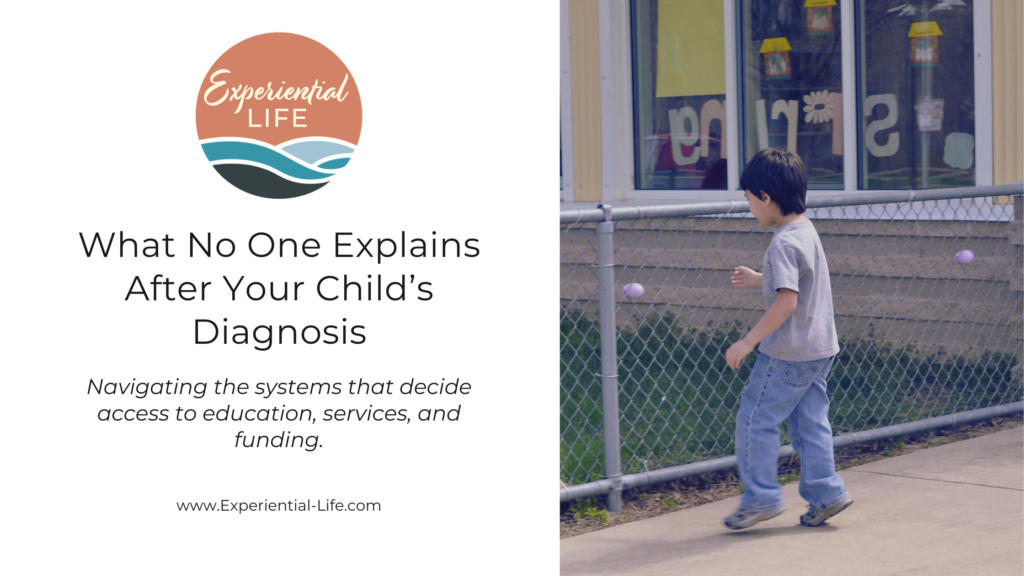
          What no on explains after your child's diagnosis: Navigating systems that decide access to education, services, and funding. Image of C standing at the fence of a playground at school. He has short brown hair and is wearing a gray t-shirt and jeans.

          Over the last decade, I’ve worked with more than 1,000 families and partnered with over 100 providers, professionals, agencies, and hospital systems.

          I’ve managed federal and state funding, and sat inside the systems families are expected to navigate alone.

          I learned how they work – from the inside.

          Not from pamphlets.

          Not from Facebook groups.

          From the rooms where decisions are made.

          And what I realized is this:

          Families aren’t failing.

          They’re navigating complex, siloed, and hard to understand systems.

          Access Shouldn’t Depend On Luck, Word Of Mouth, Or Who You Meet

          It’s been almost 15 years since my son’s diagnosis… and not much has changed.

          2 years ago, I started hosting presentations from local disability organizations for my son’s inclusive theater group.

          Afterward, parents kept coming up to me.

          Thanking me.

          Asking follow-up questions.

          Writing names and taking numbers like they’d just been handed a lifeline.

          Over and over, I heard the same sentence:

          How did I not know this existed?

          These weren’t new or exclusive organizations.

          Families just didn’t know they existed – because you don’t know what to search for if you don’t know something exists.

          That’s when it clicked.

          Access to information, resources, and support depended on word of mouth, luck, and who happened to be in the room.

          I couldn’t live with families’ access to support depending on who they know instead of what they need.

          One Place. Less Overwhelm. More Support

          This is what I wish someone had handed me instead of a stack of referrals.

          That’s why I built Experiential Life.

          Not another stack of referrals.

          Not another 40-tab research spiral.

          A place where families go to:

          → Meet the people that work inside the systems – so you don’t have to search for them

          → Understand why the school won’t give your child more speech services, when the developmental pediatrician said they need more.

          → Get the words to say on the phone when insurance denies your request for therapy that will help your child buckle their seatbelt.

          → Stay up to date with policy and funding changes that happen every year

          → Be in a community that shares your struggles and understands why socks with seams are enemy number 1 in the morning rush.

          We shouldn’t need to change careers to understand the systems.

          We shouldn’t need honorary legal, medical, and educational degrees.

          It should be easier to get support and services for our neurodivergent children.

          If you’re tired of feeling like you were handed a stack of referrals in the middle of a hurricane, and told, “Godspeed,” this space was built for you.

          AND, if any of this resonates, please share this article with your network and subscribe to the newsletter to get instant access to future articles, weekly advocacy tips, exclusive event invites, and news you can use.
          Do you crave trustworthy information and resources to help you support your Neurodivergent child?

          Subscribe to the Experiential Life newsletter and get advocacy tips, exclusive event invites, and news you can use - delivered straight to your inbox.

            We won't send you spam. Unsubscribe at any time.
          • When “Support” Feels Like Punishment: 3 Questions To Ask Before Emailing the IEP Team

            When “Support” Feels Like Punishment: 3 Questions To Ask Before Emailing the IEP Team

            “Am I overreacting – I just need someone to tell me what to do.”

            Last week, a parent asked:

            “What would you do if your child was told they can no longer eat lunch in the cafeteria — they have to eat in a classroom with their aide?”

            And honestly?

            I was speechless at first.

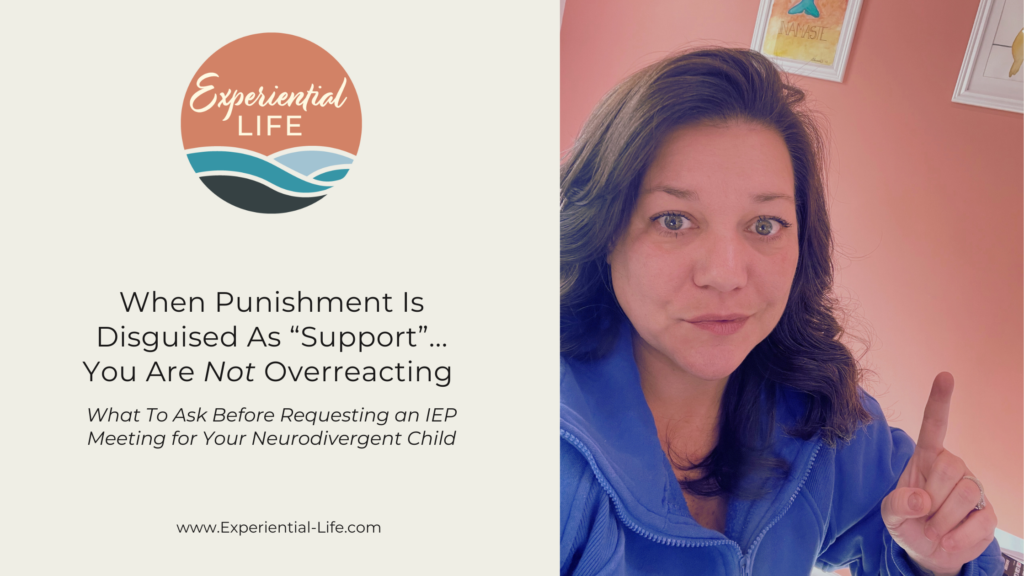
            Text on graphic reads: When Punishment is Disguised as Support - you are not overreacting. What to ask before requesting an IEP meeting for your neurodivergent child

            When Punishment Is Disguised As Support

            I remember the cafeteria – loud, and sometimes smelly. The clanking of trays, the laughing, the sound of sneakers squeaking on the floor, the mixture of overcooked canned green beans mixed with slightly burnt french fries …

            It’s kind of a sensory nightmare – and it’s also a necessary break from the rigidness of the classroom. 

            So I asked, “How long does your child have to eat lunch in the classroom? And what happened?

            Her child loves being social and like many of our kids, struggles to make friends. 

            On this particular day, they were eating at the table, and they kept trying to join the conversation – and kept getting ignored, kept seeing eyes roll, kept hearing whispers and laughter around him…

            And it was too much. They jumped up to run to the bathroom, and in the process hit the table and sent trays and lunch boxes flying.

            That’s it. That’s the moment when the teacher and principal decided they should have a “quiet place to eat.”

            But is that what this child actually needs – more importantly, is it what they want?

            Behavior is communication.

            And lunch is part of the school day.

            Which means the IEP applies there too.

            There should be services, supports, and accommodations in place to help them navigate transitions, social interactions, and sensory overload – including lunch and recess.

            So when the email came in and said, “we want to support your child so they have a safe and calm lunch experience…”

            It sounded a lot more like removing their child… in order to keep the peace.

            It’s Easy to Go Into Mama Bear Mode

            When she asked me, “Am I overreacting?” I heard the words she didn’t say:

            “This feels wrong. I am pissed, I am sad, and I have no idea what to say or do.”

            Because that’s the part we don’t talk about.

            The moment after something happens – after the email, after the phone call, after the food flies…

            When your chest is tight and your brain is already drafting the email.

            You open a blank message to the IEP team, stare at the cursor blinking – it feels like it’s taunting you…

            You are thinking about what you want to say vs. what you should say. What they’re going to think when you do drop off tomorrow – what they’re saying behind your back, before the next meeting…

            It feels like you’re spiraling. 

            You feel protective.

            You feel angry.

            You feel like your child is being punished for their diagnosis.

            Those feelings are legit – valid – true for you.

            AND there are moments when the most powerful move isn’t louder - it’s clearer.

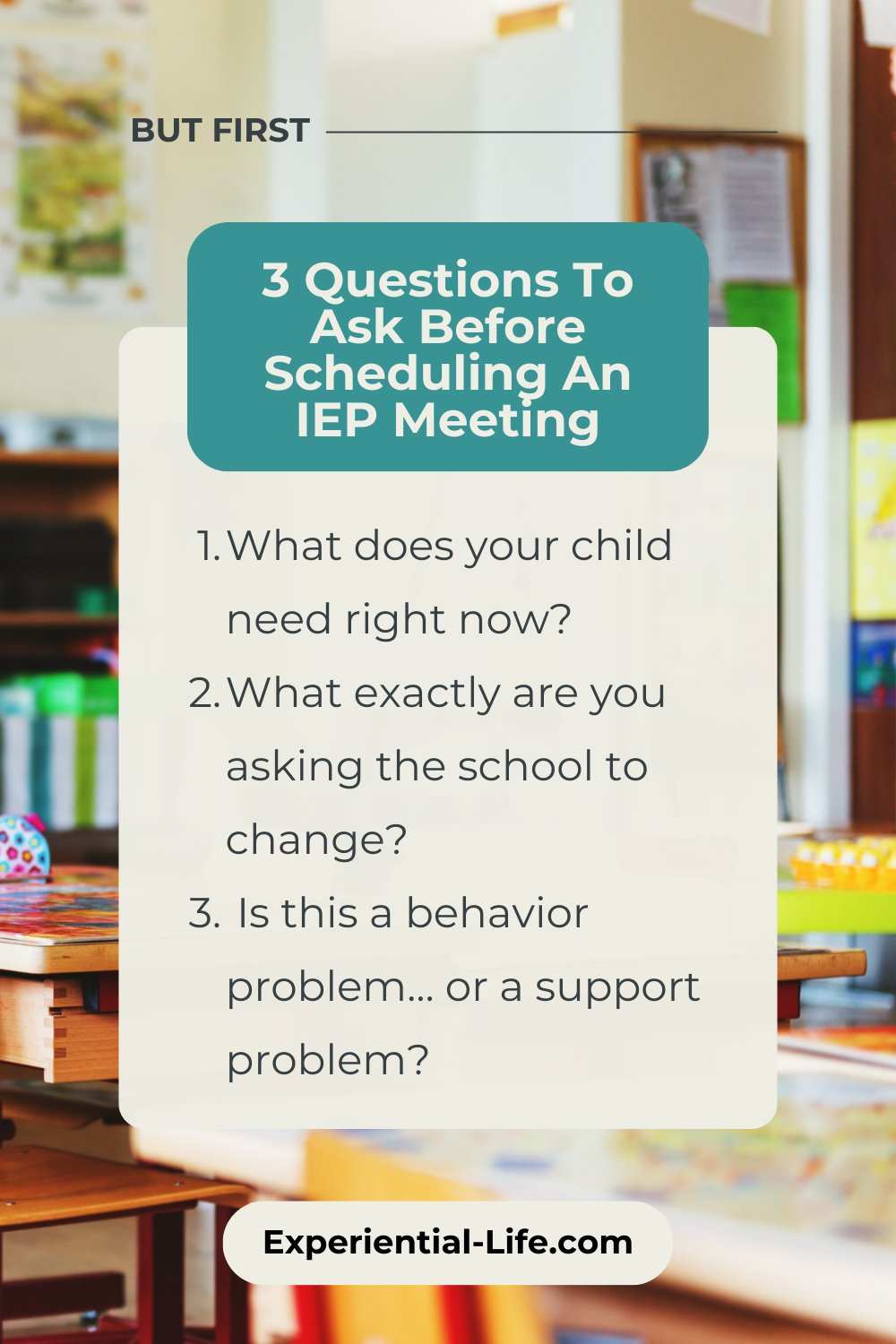
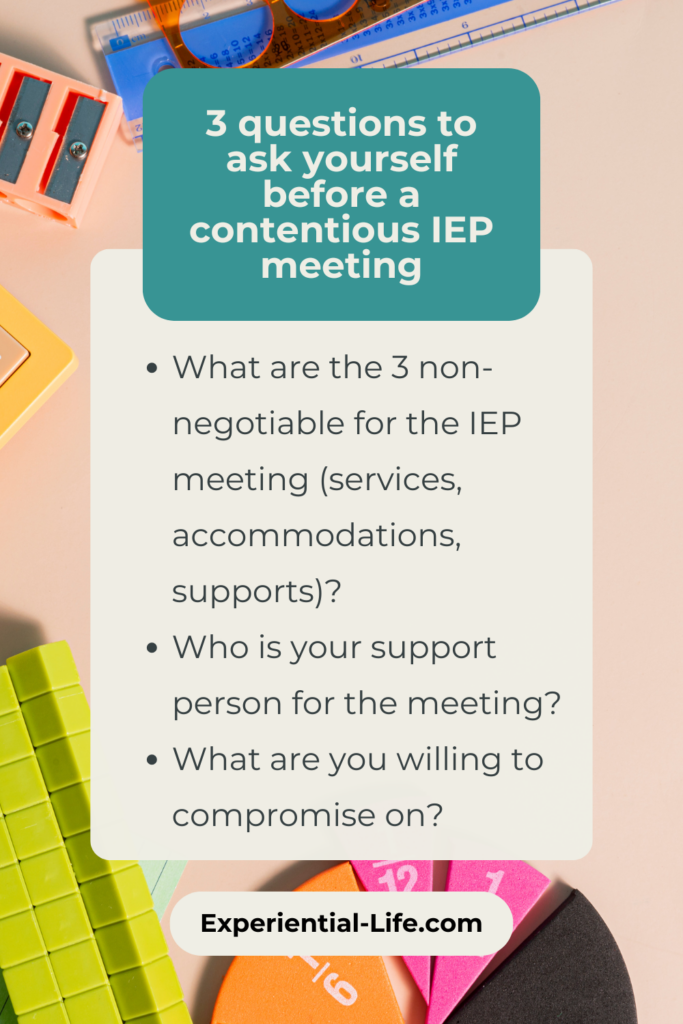
            Graphic reads: But first - 3 Questions to ask before scheduling an IEP Meeting: 1. What does your child need right now? 2. What exactly are you asking the school to change? 3. Is this a behavior problem or a support problem?

            AND there are moments when the most powerful move isn’t louder – it’s clearer.

            Sometimes you have to think two steps ahead.

            To respond strategically – not just react emotionally.

            I wanted to slow her down.

            Not because she was wrong.

            Not because the cafeteria decision didn’t deserve scrutiny.

            But because before she emailed the IEP team, I wanted her to know:

            → What does your child actually need right now?

            → What exactly are you asking the school to change?

            → Is this a behavior problem… or a support problem?

            Because those are not the same thing.

            And the answer changes everything about what you say next.

            The Question Most Families Skip

            Before you fire off the email to the principal, you have to ask:

            What does the IEP already say about transitions? About social support? About regulation?

            Because removing a child from lunch doesn’t teach regulation – and it feels a lot like punishment.

            And when a child is separated from peers as a response to behavior, that’s often a signal that the IEP needs to be revisited – not that the child needs more consequences.

            This Is What Your IEP Team Should Be Doing

            The IEP is a living document – you don’t set it and forget it. 

            It’s supposed to be updated as progress is made, or not. 

            And sometimes – it needs to be revised – right in the middle of the year.

            If you are unsure, ask yourself:

            ❓ Are the goals aligned with my child’s needs right now?

            ❓ Are the supports in place for my child or for compliance?

            ❓ Is the plan individualized, based on my unique child and their educational needs?

            When families understand how to evaluate what’s written, how it’s being implemented, and how to request changes mid-year – it stops feeling like a fight and it starts feeling the the next right move.

            They know what to ask.

            They know what to look for.

            They know what to say.

            And they stop second-guessing themselves.

            If you’ve ever asked,

            “Am I overreacting?”

            What you’re probably feeling is that something doesn’t line up – and you don’t know how to say it without making it worse.

            ​You don’t need to become an educational advocate overnight.

            You don’t need to threaten due process.

            And you don’t need to sit quietly and hope it resolves itself.

            That’s exactly why we’re hosting the Mid-Year IEP Check-In.

            We’re walking through:

            ✔️ How to request an IEP meeting mid-year

            ✔️ What to say when something feels off

            ✔️ How to evaluate whether supports are working

            ✔️ And communicate with the team – without being labeled “that parent.”

            Because you don’t have to choose between staying silent and going nuclear.

            There’s another option.

            And once you see it, you won’t unsee it.

            If you’re staring at an email draft right now…

            Or you know you will be soon – this conversation was built for you.

            Join us on February 19, 2026 at 12pm EST.


            If you’re not able to attend live, the replay lives inside the Experiential Life app.

            You can learn more here: https://experiential-life.com/experiential-life-app/

            AND, if any of this resonates, please share this with your network and subscribe to the newsletter to get instant access to future articles, weekly advocacy tips, exclusive event invites, and news you can use.
            Do you crave trustworthy information and resources to help you support your Neurodivergent child?

            Subscribe to the Experiential Life newsletter and get advocacy tips, exclusive event invites, and news you can use - delivered straight to your inbox.

              We won't send you spam. Unsubscribe at any time.
            • Deciding What Is Urgent When Raising A Neurodivergent Child

              Deciding What Is Urgent When Raising A Neurodivergent Child

              Last week, I hit a wall 🫠

              There is so much happening in our country and around the world – and it is devastating. 

              I haven’t been able to focus, everything feels urgent – and I feel powerless to help. 

              Add to the devastating news cycle, the daily decisions:

              → What to make for dinner.

              → Gotta follow up on the Medicaid waiver denial.

              Shoot – there are huge cuts to services for people with disabilities in our state.

              Crap, I need to follow up with the expert presenter for next week. 

              → Gotta remember he has an eye appointment this week. 

              Damn – I never followed up on the ENT referral for him.

              → And he wants his driver’s license… That’s a whole new fresh set of anxiety… if he fails, if he passes, other drivers on the road…

              I feel like I can’t breathe. 

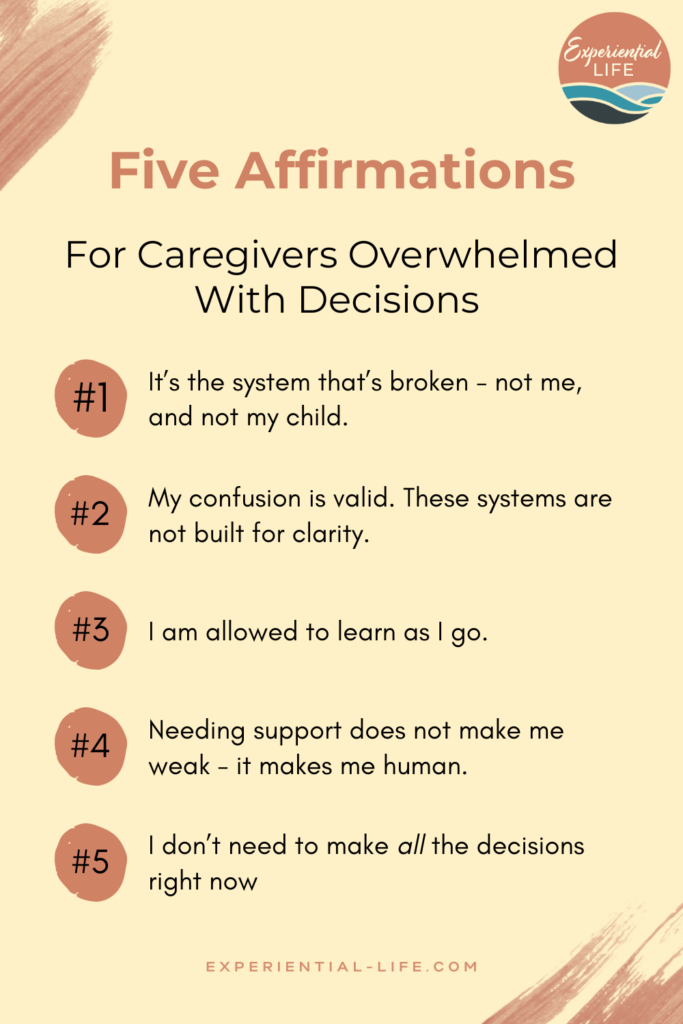
              Graphic reads: Five Affirmations for Caregivers Overwhelmed with Decisions: 1. It's the system that's broken - not me, and not my child. 2. My confusion is valid. These systems are not built for clarity. 3. I am allowed to learn as I go. 4. Needing support does not make me weak - it makes me human. 5. I don't need to make all the decisions right now. Graphic is set on a light yellow background and the Experiential Life logo sits in the top right corner.

              Everything feels urgent - and it’s just too much

              So… as one might do when faced with impossible decisions, that hit in rapid succession… I froze. 

              I couldn’t stay focused on just one thing – even the thing right in front of me – because they are all right in front of me…

              All the time. 

              Demanding my attention… along with C, asking if I could please sew up the hole he put in his Captain America plushie, for the tenth time in as many minutes.

              Why we jump into “Panic Mode” or “Freeze Mode”

              I know what’s happening – it’s a pattern I see over and over again with families raising neurodivergent kids. 

              👉 Sometimes it hits after a well-visit when you’re handed 5 referrals to different therapists and specialists. 

              👉 Sometimes it hits after an IEP meeting when the team presents goals that just don’t sit right in your stomach. 

              👉 Sometimes, it’s coming home after a really long day and having to decide what to make for dinner and then actually making it. 

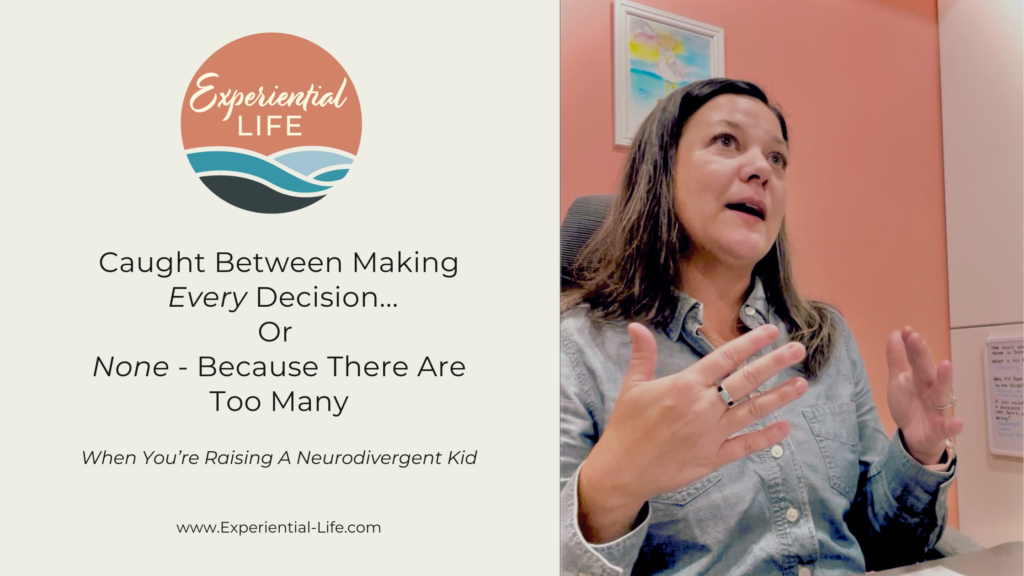
              On the left is the Experiential Life Logo, followed by: Caught between making every decision... or... none - because there are too many when you're raising a neurodivergent kid. On the right is an image of Christy (Founder and CEO of Experiential Life) wearing a blue denim button down shirt and her shortish brown hair hanging over her shoulders. She is talking with the camera catching her mid-sentence. Her hands are raised in front of her as if emphasizing a thought.

              We either panic – jump down the research rabbit hole and start making calls and decisions as if tomorrow will never come…

              Or 

              We freeze – we make no decisions because no matter how hard we try, it feels literally impossible. We don’t know where to start… and if we’re being honest with ourselves, we’re not entirely sure how.

              Both are responses to the same problem – too many decisions, with no way to tell which ones really matter right now.

              I’ve worked with over 1,000 families, and every single one of them, at some point in time, hit this inflection point. 

              I’m pretty sure my therapist would say that it is a natural response to your overwhelmed nervous system. 

              The one question that breaks the pattern

              Graphic reads: Before you make any decision... ask: What does my neurodivergent child need most right now?

              Yesterday, after feeling like not doing anything was not serving me – or this community we’re building…

              I asked myself the question I always ask families I work with:

              “What do you need most right now?”

              Prioritizing what I need to do, what I want to do, and what can wait. 

              I decided to focus on what is the most urgent thing on the list of a ton of things I need to take care of for C. 

              Highest on the list – appealing his denial for Medicaid waiver services. 

              I emailed an organization that will help me with the appeals process. 

              It didn’t solve all the problems – or help make all the decisions…But it helped me focus on one goal, one action, one potential problem solved.

              Appealing the denial of services has been my biggest stressor – especially given all the changes to Medicaid (federally and in my home state of Maryland). 

              Once I named what was causing me the most stress (denied services and supports) and why it felt so hard to follow up on (changes to Medicaid broadly) – it allowed me to focus my energy. 

              Decision fatigue or decision paralysis comes when we have too many decisions to make, all at once, and they all feel urgent – and we can’t seem to prioritize them. 

              Once I was able to identify what I needed – I was able to continue down the line of competing priorities and make a list based on level of importance (and how easy they are to just check off). 

              The appeal is the one with the closest and most urgent deadline. It had to come first. 

              And it feels hard because it is hard – I have to understand the process, what happens next, and what my choices are…

              I need someone who understands and can help me through the process – someone who works in that system and understands the rules. 

              When you’re raising a neurodivergent child, you don’t have the luxury of not making the decisions… and delaying decisions can feel like you’re failing your child. 

              So we get stuck.

              But I think what we often fail to remember is that not every decision has a hard deadline.

              Not every decision is urgent.

              And not every decision will help us with what we need most right now. 

              So if you’re feeling frozen – not lazy, not failing, just overloaded – start with one question:

              “What do I need most right now?”

              And that my friends is why Experiential Life exists…

              To help in the “in-between” moments. 

              When you feel the urge to research just one more thing before bed…

              Or when the IEP team sends the Prior Written Notice and you just need a gut check. 

              When the pediatrician hands you 3 new referrals, and you don’t know who to call first or what to say when you call. 

              Or when you read an article that says your state is cutting over 10M from disability services, but you aren’t sure what that means. 

              One place. Less overwhelm. More support.

              AND, if any of this resonates, please share this article with your network and subscribe to the newsletter to get instant access to future articles, weekly advocacy tips, exclusive event invites, and news you can use.

              Do you crave trustworthy information and resources to help you support your Neurodivergent child?

              Subscribe to the Experiential Life newsletter and get advocacy tips, exclusive event invites, and news you can use - delivered straight to your inbox.

                We won't send you spam. Unsubscribe at any time.
              • When IEP Progress Leads to Reduced Support: What Families Need to Know

                When IEP Progress Leads to Reduced Support:
                What Families Need to Know

                They started to pull back on his 1:1 aide… and then he pulled the Fire Alarm

                The IEP team saw progress, and pulled back dedicated 1:1 support. 

                Honestly – it felt like a moment to celebrate. 

                Until it wasn’t…

                Because he didn’t have someone dedicated to supporting him…

                When he pulled the fire alarm to get out of an assembly he didn’t want to go to.

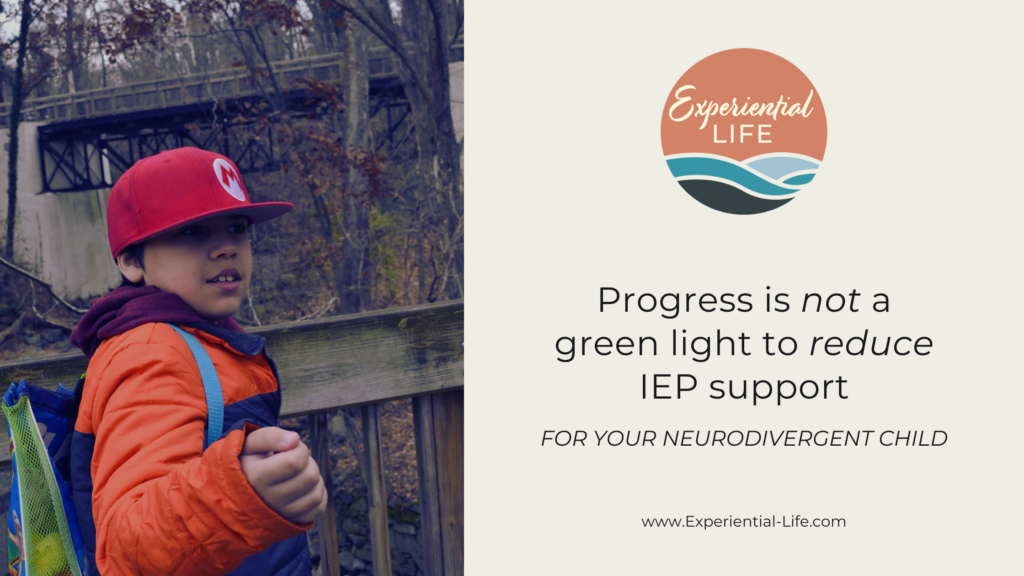
                An autistic 10 year old stands outside with red Mario hat, orange coat, and Toy Story Backpack. He is surrounded by a wooden path and trees with no leaves. The text reads: Progress is not a green light to reduce IEP support for your neurodivergent child.

                Progress isn’t linear, and...
                accommodations and supports are what make progress possible.

                When I asked for an IEP meeting, I was met with, “Let’s see what happens…”

                Even though the fire alarm incident caused complete chaos…

                The fire department and sheriff’s office arrived on scene. The entire school evacuated. I had to pick C up – and he was completely traumatized. 

                To this day he randomly says, “Remember when I pulled the fire alarm. It is not for fun, it is for emergencies. It was bad that I pulled the alarm.”

                Even with the trauma and chaos, the school didn’t think the lack of a dedicated aide at the time of transition between activities was the trigger point. 

                They wanted to see if he continued to struggle with transitions.

                Friends… He did. 

                Not only because he tied the transition to a traumatic event, but because he struggles with transitions – and it was always a part of his IEP – until it wasn’t.

                And, in the middle of the school year – when the admin and teachers felt like so much progress had been made – we held an IEP meeting to revisit “pulling back on the 1:1 support during transitions.

                To be clear - progress was made.

                Progress doesn’t mean support needs vanish.

                It means the support is working. 

                And that was the basis of my argument for the IEP meeting and continued 1:1 dedicated aide for the entire school day. 

                As a parent and member of the IEP team, you are allowed to push back on changes to the IEP you don’t agree with. 

                You are allowed to call an IEP meeting as often as necessary to make sure that the goals, accommodations, services, and supports align with your child’s educational needs.

                Knowing you can call an IEP meeting at any time and doing it are not the same…

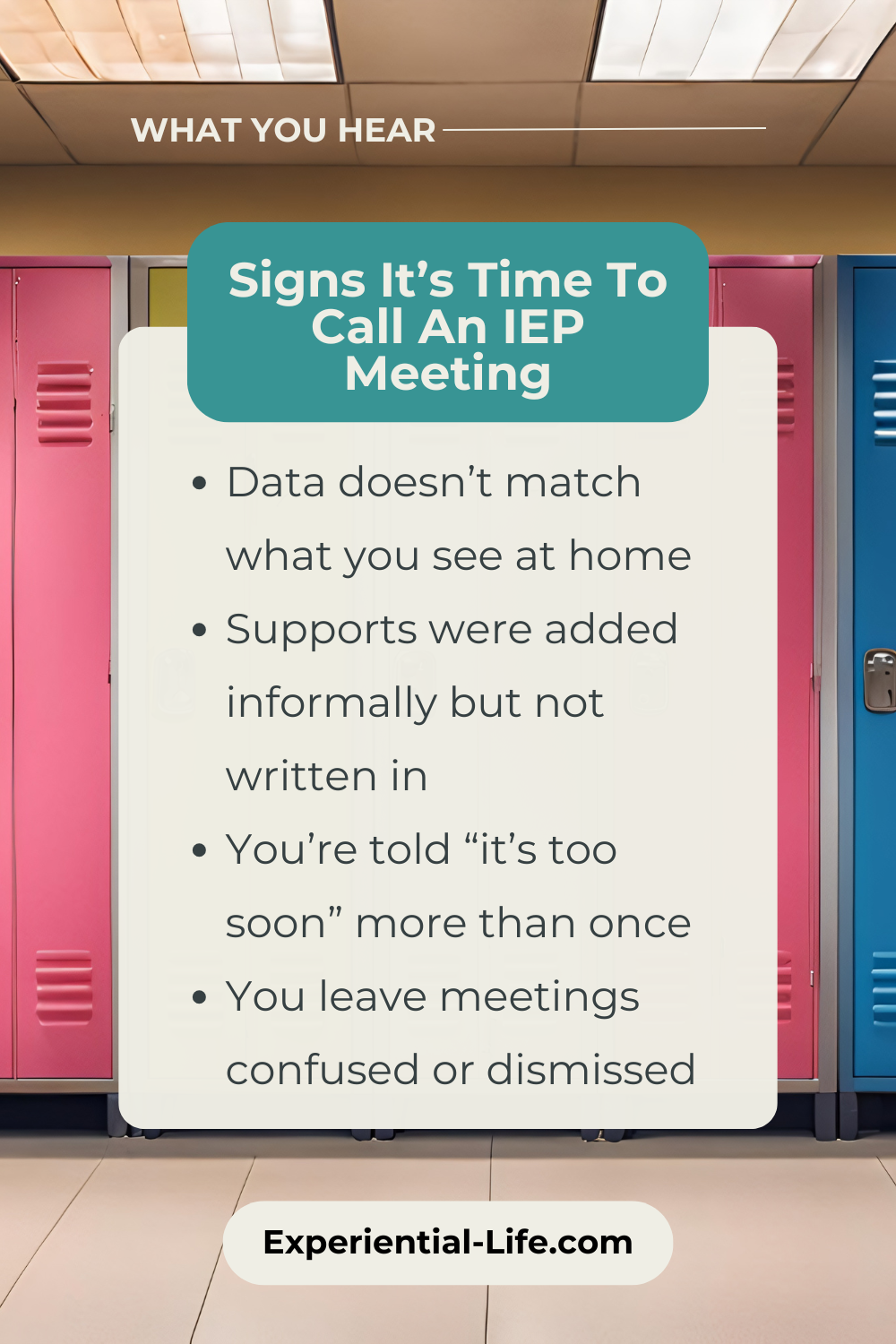
                Bright colored lockers sit in an empty school hallway. Text reads: When you hear... Signs it's time to call an IEP meeting: Data doesn’t match what you see at home Supports were added informally but not written in You’re told “it’s too soon” more than once You leave meetings confused or dismissed

                Raising neurodivergent kids means that there are a LOT of professionals, experts if you will, giving you their advice, recommendations, and creating plans for your child. 

                And it can be intimidating as hell. 

                VALID – feeling the need to say something, but not knowing what or how to say it to people who spent a crap ton of money and time to become the experts they are is intimidating. 

                AND…

                You are also an expert. 

                You’ve heard it before, but it’s worth repeating…

                You know your child best.

                So when:

                → Data doesn’t match what you see at home

                → Supports were added informally but not written in

                → You’re told “it’s too soon” more than once

                → You leave meetings confused or dismissed

                It is valid to call an IEP meeting – even if it isn’t time for the annual meeting… maybe because it isn’t time.

                So you call the mid-year IEP meeting… but then what?

                Families want to know that when they walk into the IEP meeting their concerns will be validated, their suggestions met with respect, and a plan that will support their child’s educational goals. 

                You want to advocate confidently and ensure your child’s educational plan truly fits their needs.

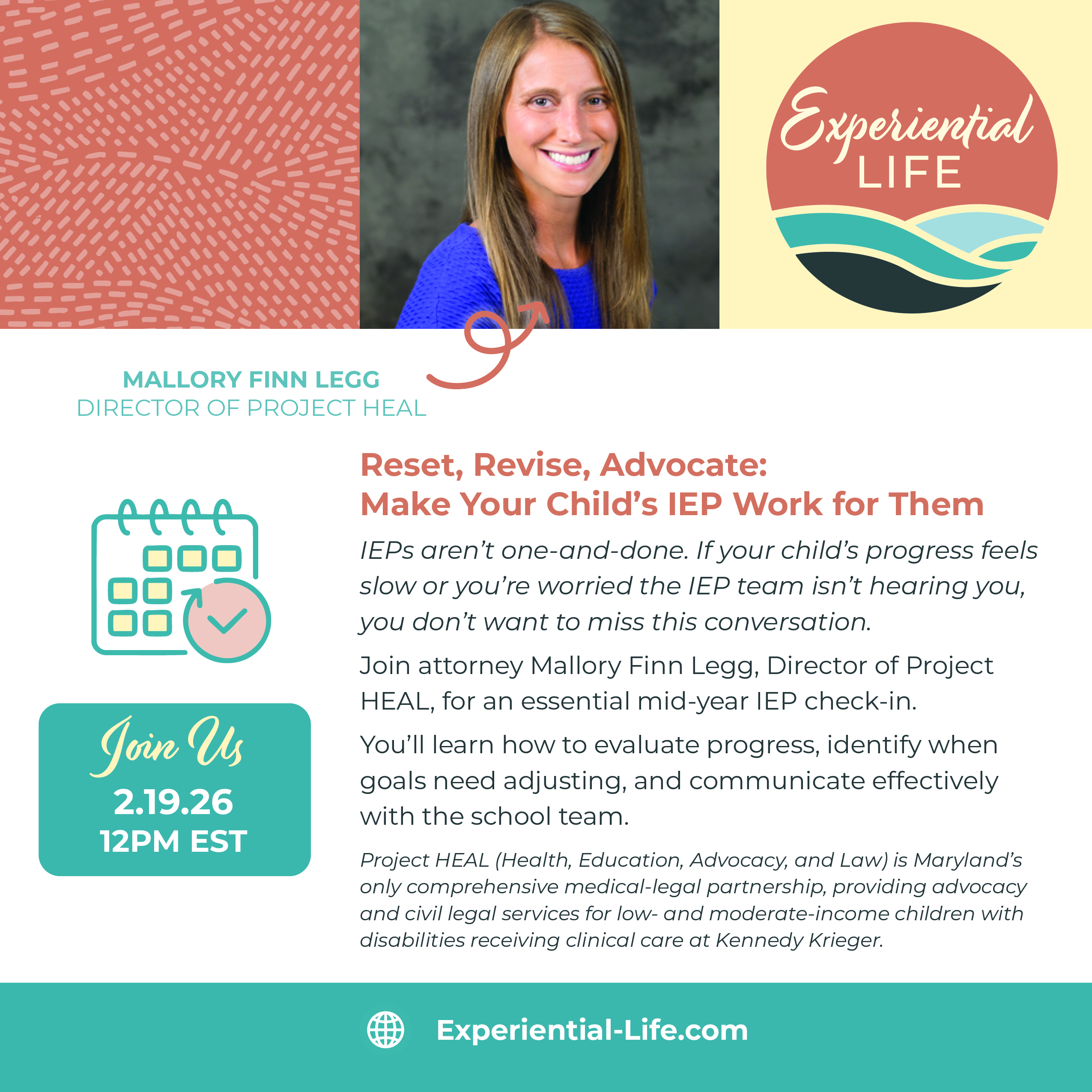
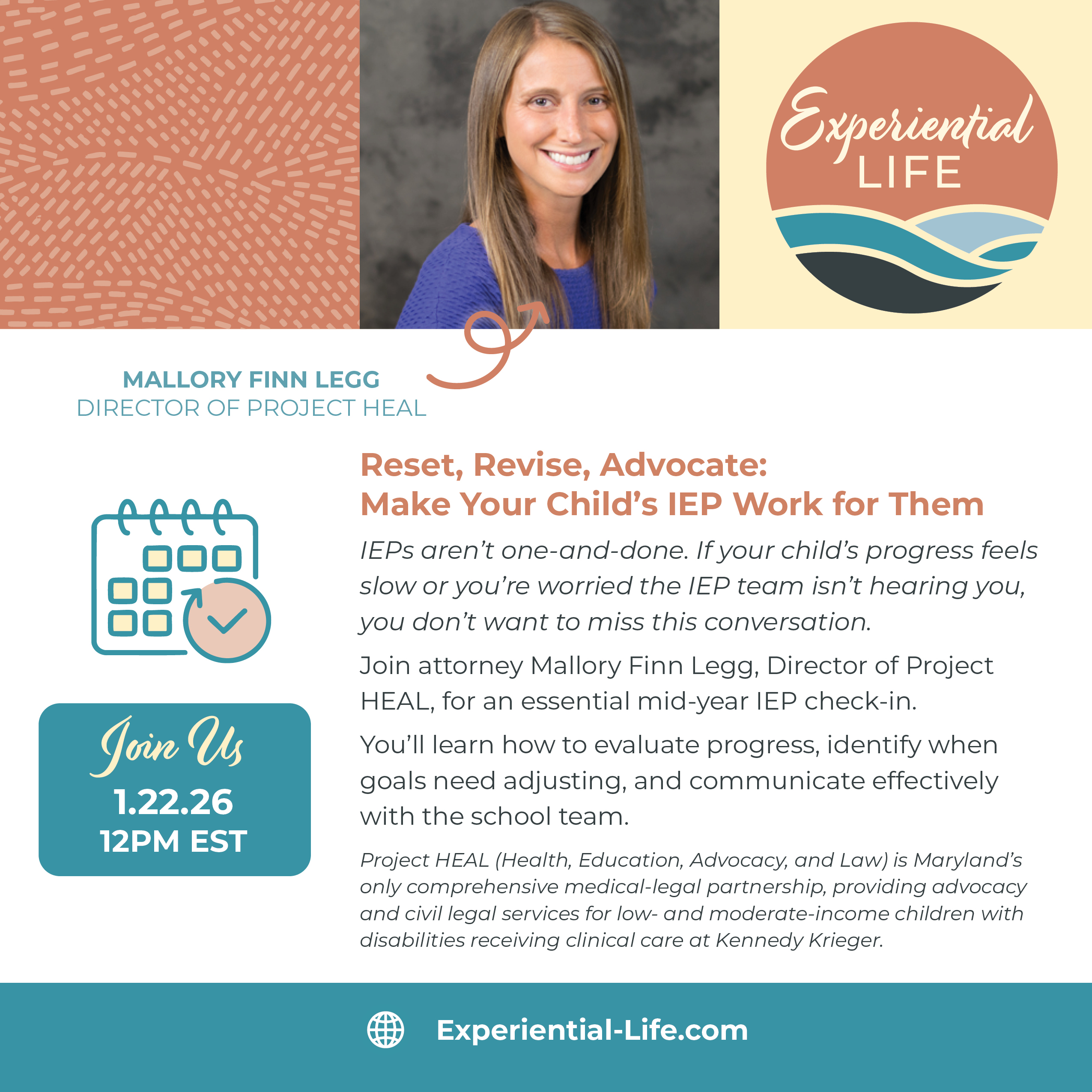
                That’s why we invited Mallory Legg, Director of Project HEAL at Kennedy Krieger Institute, to share expert strategies to evaluate progress, adjust goals, and navigate disputes with the school team.

                And you’re invited.

                Join us on January 22, 2026 at 12pm EST…

                If your child’s IEP goals haven’t been hitting the mark after the first few months of school, it’s time for a reset.

                Mallory will share expert strategies to:

                ✔️ evaluate progress,

                ✔️ adjust goals, and

                ✔️ navigate disputes with the school team.

                This conversation will give you the tools to advocate confidently and ensure your child’s educational plan truly fits their needs.

                PSSST – it’s FREE to attend…

                But we do require registration so you can get the link to join us. 

                Just click the button below ⬇️

                If you’re not able to attend live, the replay lives inside the Experiential Life app.
                You can learn more here: https://experiential-life.com/experiential-life-app/

                AND, if any of this resonates, please share this with your network and subscribe to the newsletter to get instant access to future articles, weekly advocacy tips, exclusive event invites, and news you can use.
                Do you crave trustworthy information and resources to help you support your Neurodivergent child?

                Subscribe to the Experiential Life newsletter and get advocacy tips, exclusive event invites, and news you can use - delivered straight to your inbox.

                  We won't send you spam. Unsubscribe at any time.
                • When Survival As A Caregiver Relies On Broken Systems

                  When Survival As A Caregiver Relies On Broken Systems

                  If your weekend went nothing like you hoped – if it was full of meltdowns, stress, or canceled plans – same.

                  Yellow graphic with the title, "Four Affirmations for Caregivers Navigating Disability Systems" In the top right corner is the Experiential Life Logo. The Affirmations read: 1. It's the system that's broken - not me and not my child. 2. My confusion is valid. The systems are not built for clarity. 3. I am allowed to learn as I go. 4. Needing support does not make me weak - it makes me human.

                  I imagined baking cookies, decorating the tree, maybe driving around to look at lights before curling up on the couch for a holiday movie.

                  We even had tickets to see my middle son perform in the Nutcracker.

                  But that’s… not what happened.

                  We had snow on Friday, so Saturday’s performance was cancelled.
                  It was also my middle son’s birthday week, but with tech rehearsal, school, and work – he wasn’t home long enough to celebrate.

                  And C did not take any of it well.
                  Like, at all.

                  It was meltdown after meltdown.

                  And it was exhausting

                  My husband and I took turns – “tag, you’re it,” – trying to help C regulate when his nervous system was firing on all cylinders.

                  This, my friend, is why we need layers of support – not just strategies.

                  The Hidden Mental Load Caregivers Carry Every Day

                  I talk to families every single day who feel exactly like thistrying to survive the day they’re in, while feeling vaguely panicked about the things they might be missing for the future.

                  Planning for next week feels impossible.
                  Planning for adulthood? Out of reach.

                  If that sounds like you… lean in for a second.

                  You’re doing great.
                  You’re not failing your child.
                  You’re not behind – you’re overloaded.

                  Parenting is hard. Parenting a neurodivergent child in a changing, underfunded, politically volatile system is harder.

                  There’s no handbook, no roadmap, no checklist that fits your child exactly.

                  And even when you do use the tools, do the work, stay regulated, and prepare… life still happens.

                  Holidays still disrupt everything. Meltdowns still show up. Exhaustion still wins.

                  Neurodivergent Families Rely on Complex Systems of Support

                  And this is where it gets even more complicated.

                  Families like ours rely on a network of supports that should be working with us:

                  ✔️ Schools providing accommodations and services

                  ✔️ Funding to cover therapies, tutors, programs, and respite

                  ✔️ Medical professionals and specialists for co-occurring conditions

                  ✔️ Government-funded programs that allow disabled adults to live with autonomy and dignity

                  To the right is an image of Christy, with long brown hair, a salmon colored sweater, and black pants kneeling next to her 4 year old autistic son, who is wearing a black hoodie, jeans, and has short black hair. They are standing outside on a paved trail, in the woods, with fallen leaves surrounding them. Text reads: When Survival As a Caregiver Means Relying On Broken Systems.

                  But this year?
                  Everything feels like it’s shifting, and not for the better.

                  Here’s why parents are feeling a level of fear, confusion, and overwhelm that’s bigger than the holidays:

                  ● Dismantling the Department of Education

                  ● Medicaid funding cuts + proposed changes to eligibility

                  ● Attacks on Section 504 of the Rehabilitation Act

                  ● Public figures using slurs to describe disabled people

                  ● Calling neurodivergent people “threats to the American way of life”

                  If it feels impossible to stay informed… it’s because it is.

                  Staying Informed Without Burning Out

                  You shouldn’t have to be a policy expert or stay up until 1am Googling terms you’ve never heard of just to keep your kid safe.

                  That’s why connection to trusted disability advocacy spaces matters.

                  Here are a few I rely on for accurate updates:

                  5calls

                  KFF (Kaiser Family Foundation)

                  → The Arc of the United States

                  ASAN (Autistic Self-Advocacy Network)

                  National Down Syndrome Congress

                  Little Lobbyists

                  They help cut through the noise – and keep families informed without doomscrolling.

                  A Supportive Community for Overwhelmed Families Raising Neurodivergent Children

                  This is also why I created Experiential Life.

                  Because when families feel like they’re failing, it’s almost always a reflection of the system failing them – not their parenting.

                  Because you don’t know what you don’t know.
                  And you can’t find information about something you don’t know exists.

                  Experiential Life was built to be the shortcut:

                  📲 Accurate, timely, relevant information

                  👩‍💻 Monthly expert calls you don’t have to chase down information

                  📋 Downloadable scripts and guides

                  💬 A private community of parents who get it

                  A place to land when everything feels like too much

                  If this feels like where you are right now – there’s room for you inside.

                  You don’t have to plan everything today.
                  But you can join the place that will have it ready when you are.

                  And for the month of December, I have a gift for you:

                  Use code CHEER25 for 30 days FREE + $10 off your monthly membership, for as long as you stay a member.

                  It’s support you’ll actually use – for less than a co-pay a month.

                  AND, if any of this resonates, please share this with your network and subscribe to the newsletter to get instant access to future articles, weekly advocacy tips, exclusive event invites, and news you can use.
                  Do you crave trustworthy information and resources to help you support your Neurodivergent child?

                  Subscribe to the Experiential Life newsletter and get advocacy tips, exclusive event invites, and news you can use - delivered straight to your inbox.

                    We won't send you spam. Unsubscribe at any time.
                  • What We Gave Up to Feel Safe: Grieving the Loss of Family Tradition

                    What We Gave Up to Feel Safe:
                    Grieving the Loss of Family Tradition

                    What to say... A wooden floor with a lighted garland to the right. The text reads: Holiday Boundary Scripts to Protect Your Neurodivergent Child. - "Our child's safety is more important than your comfort." - "We focus on connection over compliance." - "Safe food is better than no food." - "You don't have to agree, but you do have to respect our parenting decisions."

                    Every year, as the holiday season kicks off, I find myself grieving the loss of family and friends – not because they’ve passed away – but because our relationship did.

                    It’s a particular kind of grief – the kind that doesn’t come with casseroles and sympathy cards.

                    It’s the ache of relationships changed, not by death, but by the boundaries we had to draw to protect our child.

                    And it’s especially loud this time of year.

                    The Holidays We Used to Have

                    There was a time when our holidays were loud.
                    Full of people. Packed kitchens. Kids running through the house.
                    The kind of chaos that exhausted me in the best way.

                    Until it didn’t.

                    Because while I was trying to recreate the magic I grew up with, my son was unraveling.

                    The noise, the hugs, the unpredictable conversations and overstimulation – it wasn’t festive to him. It was torture.

                    And every year, I tried to manage it.
                    Prep him. Pre-warn family. Pack fidget toys and extra snacks.
                    Smile politely while people said things like,
                    “Just send him outside with the other kids, he’ll be fine.”

                    Until the cost became too high.

                    The Boundaries We Had to Set

                    So we started saying no.

                    No to parties that went too late.
                    No to family members who couldn’t respect our child’s neurodivergence.
                    No to houses that were too loud, too crowded, too much.

                    It wasn’t a dramatic, one-time cutoff.

                    It was a slow unraveling. A pulling away. A constant recalibration.

                    We didn’t cut ties to be spiteful.
                    We made changes to stay sane.
                    We protected our peace because no one else was going to.

                    But that doesn’t mean it didn’t hurt.

                    The Grief of Self-Protection

                    I don’t think we talk enough about the grief that comes with choosing boundaries.

                    Not just the kind where you’re sad that something ended – but the kind where you miss the version of family you thought you’d always have.

                    You miss the traditions.
                    You miss the idea of being included.
                    You miss being seen without having to explain everything.

                    Grief isn’t always loud sobs and obvious loss.

                    Sometimes it’s just noticing the silence at your holiday table and wishing it didn’t have to be this way.

                    What We Gave Up to Feel Safe: Grieving the Loss of Family Traditions While Raising A Neurodivergent Child. To the right is an image of C, my autistic teen, walking over a wooden bridge in the woods. He is wearing a bright blue sweat outfit and is treading across the wooden planks very carefully.

                    What We Gained (Even While We Lost)

                    It took years of trial, error, guilt, and therapy – but eventually, our new traditions started to stick.

                    We now have quieter holidays, more predictable rhythms, and less pressure to perform.

                    Our son is more regulated.
                    We are less resentful.
                    And honestly, that’s something worth celebrating too.

                    But the grief still lingers.
                    And that’s okay.

                    Because you can feel peace and pain at the same time.

                    You can protect your child and still wish you didn’t have to.

                    You can be proud of your boundaries and still miss the people they keep out.

                    And you don’t have to figure out HOW alone.

                    If this sounds familiar, you’re not alone.

                    And you don’t have to figure it out in isolation.

                    We’re having an honest, real conversation with Sharon Medina, conscious parenting coach, about how to set boundaries before the group text gets out of hand this year.

                    Expert Advice: How to Manage Holiday Meltdowns, Stress, and Anxiety

                    🗓️ December 4 at 7PM EST
                    📲 Replay included inside the Experiential Life App
                    👉 Register here

                    We’re talking about:
                    ✔ scripts you can use with family (even the pushy ones)
                    ✔ how to prep your child for the break so meltdowns decrease
                    ✔ how to reduce YOUR anxiety before the holiday chaos begins

                    Let’s Make This Season Different

                    This year, I’m not chasing perfection.

                    I’m not justifying our choices.
                    I’m not mourning the people who don’t want to understand.

                    I’m holding space for what was, honoring what is, and making room for joy – even if it looks a little different now.

                    And if you’re doing the same?

                    I hope you’ll join us.

                    AND, if any of this resonates, please share this with your network and subscribe to the newsletter to get instant access to future articles, weekly advocacy tips, exclusive event invites, and news you can use.
                    Do you crave trustworthy information and resources to help you support your Neurodivergent child?

                    Subscribe to the Experiential Life newsletter and get advocacy tips, exclusive event invites, and news you can use - delivered straight to your inbox.

                      We won't send you spam. Unsubscribe at any time.
                    • Open Letter to the Mom Running on Peppermint Mocha Lattes and Scotch Tape

                      Open Letter to the Moms Running on Peppermint Mocha Lattes and Scotch Tape

                      When you’re raising a neurodivergent child, the holidays hit differently. This letter is for you, if you are ready to ditch the Holiday Pinterest Boards and don’t know where to start. 

                      Graphic on a green background with hanging bulb ornaments in different colors hanging from the top. Graphic reads: Santa, all I want for Christmas - Caregiver Edition. - Low-demand days - Sensory-Friendly plans - Small gatherings - Actual connection and community - A full night’s sleep - More services and support - Less judgement - Paid respite care

                      If you love the holidays as much as you don’t… You’re not alone. 

                      And if you’re like me, right now you are dreading the holiday season. 

                      Not because you’re ungrateful.
                      Not because you don’t love your family.
                      Not because you don’t enjoy the magic of the season.

                      But because you know what December actually looks like inside your home:

                      The sensory overload.
                      The disrupted routines.
                      The unpredictable school schedule.
                      The well-meaning relatives with their not-so-helpful commentary.
                      The group chat planning marathons.
                      The social pressure to “make memories” when you’re just trying to make it through the day.

                      You can love your child fiercely
                      and still feel overwhelmed by the reality of the holiday season with a neurodivergent kid.

                      Let’s just call that what it is:
                      Being a mom, who makes all the plans, buys all the gifts, and creates all the magic.

                      You’re not failing - the holidays are just not built for families like ours.

                      And honestly? They’ve never been.

                      Holiday traditions were not created with sensory needs in mind.
                      Or communication differences.
                      Or rigid routines.
                      Or food aversions.
                      Or sensory needs.
                      Or parents who are already burned out by October, let alone December.

                      Holiday traditions were built around what was convenient for adults – not what’s realistic for kids.
                      Especially our kids.

                      So if part of you is already thinking:

                      “I don’t have it in me this year.”
                      “I can’t do that huge dinner again.”
                      “I don’t want to explain our choices to people who don’t get it.”

                      …there’s nothing wrong with you.

                      You’re not dramatic.
                      You’re not difficult.
                      You’re not Scrooge.

                      You’re paying attention.

                      The truth you already know but haven’t said out loud:

                      You can’t keep doing holidays the way your family has always done them.

                      You’ve tried.
                      You’ve stretched yourself thin.
                      You’ve forced yourself to “push through.”
                      You’ve bent over backward to spare other people’s feelings.

                      And you know what it cost you?

                      Your peace.
                      Your child’s peace.
                      The entire point of the holiday.

                      At some point, the reality hits:

                      “This isn’t sustainable.”

                      That’s not failure – that’s clarity.

                      So here’s your permission slip for this year:

                      You do not have to:

                      ❌ attend every event

                      ❌ force joy

                      ❌ let people guilt you

                      ❌ host the entire family

                      ❌ explain your boundaries for the 47th time

                      ❌ uphold traditions that don’t serve your family

                      ❌ set yourself on fire to keep other people warm

                      What you can do is prioritize:

                      ✔️ predictability

                      ✔️ low-demand days

                      ✔️ sensory-friendly plans

                      ✔️ smaller gatherings

                      ✔️ routines that matter

                      ✔️ downtime

                      ✔️ actual connection

                      Black-and-white thinking tells you it’s either:

                      “go all in”
                      or
                      “cancel everything.”

                      No.
                      There’s a third option:

                      Do the holidays differently – on purpose.
                      On your terms.
                      In a way that actually works for your neurodivergent child and your nervous system.

                      And you don’t have to figure out HOW alone.

                      I know how heavy this season can feel.
                      I also know how much lighter it becomes when you have a plan – one that actually fits your child and your family.

                      That’s why Sharon Medina and I are hosting a conversation about creating a calmer, easier, more intentional December:

                      Expert Advice: How to Manage Holiday Meltdowns, Stress, and Anxiety

                      🗓️ December 4 at 7PM EST
                      📲 Replay included inside the Experiential Life App
                      👉 Register here

                      We’re talking about:
                      ✔ scripts you can use with family (even the pushy ones)
                      ✔ how to prep your child for the break so meltdowns decrease
                      ✔ how to reduce YOUR anxiety before December even starts

                      You don’t need a picture-perfect holiday.
                      You need a peaceful one.

                      And you deserve support while you create it.

                      With you (for real),
                      Christy 💕

                      AND, if any of this resonates, please share this with your network and subscribe to the newsletter to get instant access to future articles, weekly advocacy tips, exclusive event invites, and news you can use.
                      Do you crave trustworthy information and resources to help you support your Neurodivergent child?

                      Subscribe to the Experiential Life newsletter and get advocacy tips, exclusive event invites, and news you can use - delivered straight to your inbox.

                        We won't send you spam. Unsubscribe at any time.