
The Other Side of Autism Awareness and Acceptance
- by Christy
The Other Side of Autism Awareness and Acceptance
As much as I want to shout from the rooftops that Autism Awareness and Acceptance Month needs to uplift and celebrate the voices of autistic folx who are working tirelessly to change how we talk about and support autistic people…
I want to talk about how we – families raising autistic kids – support our kids, and the autistic advocates and mentors who are working tirelessly to raise awareness, acceptance, and ultimately access.
How it started... it wasn't great
C got his autism diagnosis in late 2011.
Before levels, and during a time when it was common to hear from supporting organizations that the path forward was to find the cause and cure to autism.
The internet was full of mom bloggers describing their grief and hope to unlock the puzzle that was their autistic child.
To have the normal child they planned for.
It was easy to identify with those moms. To see my story in theirs. To feel their grief and hope and buy into the notion that my child was broken – I broke my child – and it was my responsibility to fix him.
I think back on those early years… The violent meltdowns, no way to communicate with my child, the fear that our lives would be locked in those moments forever.
I didn’t have a role model showing me another way – until I sought one out.
Listening to autistic and disabled adults changed my life and career.
I would love to say that I started looking for a different path because I knew that how I thought and spoke about C traumatized him (and the rest of our family)…
But I would be lying.
I sought something new because what we were doing wasn’t working and we were going deeper and deeper into debt trying to fix a child that wasn’t broken.
And when you chase interventions that aren’t widely recognized by the medical community – medical insurance doesn’t cover those interventions.
Not because they are gatekeeping – because they aren’t evidence based.
We didn’t have the means (or the credit) to chase solutions that weren’t covered by insurance.
We needed help, desperately.
I found a few blogs by autistic adults – and they literally turned everything I thought I knew on its head.
AND – their solutions to the problems we faced didn’t require insane travel, testing, or expensive supplements and treatments.
It literally just required me to change my mind about autism and how I see and care for my son.
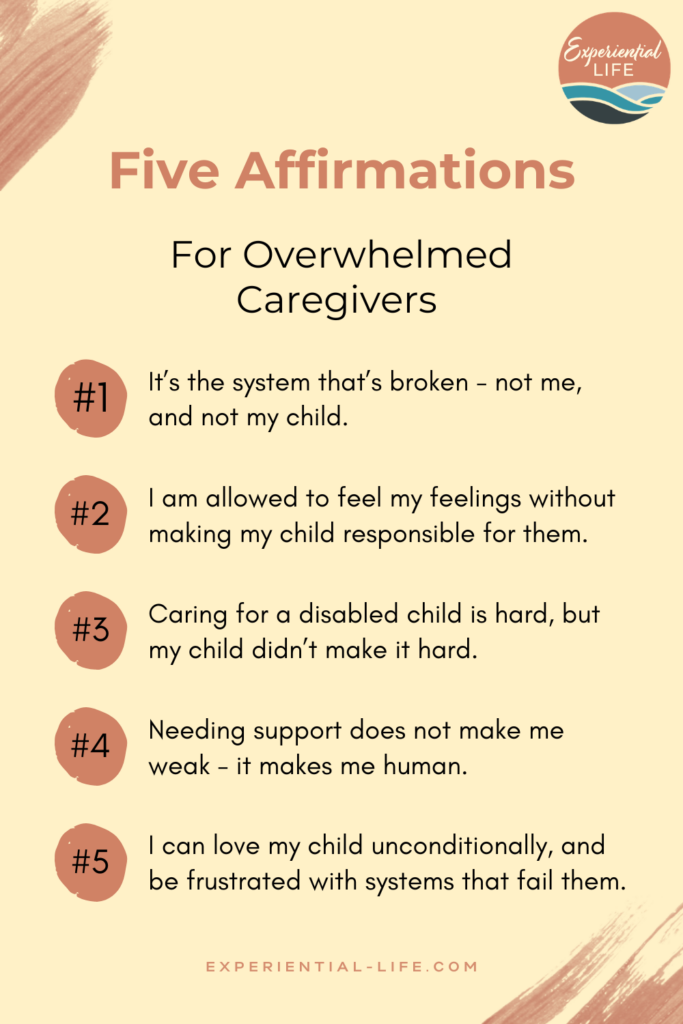
👉 To stop seeing him as a problem and start seeing behaviors as communication.
👉 To look beyond the meltdowns and self-injurous behaviors and find the source of what was causing the distress.
In that moment, my life changed.
I learned just how valuable and necessary it is to stop centering my experience of my son’s autism and painting it with the broad “tragedy” strokes…
And instead, center my son’s experience – his environment, his communication, his sensory needs and aversions – and use that experience to inform how we supported him.
15 years later, and I am starting to see some of the old talking points resurface.
The rise of MAHA in mainstream is bringing back cause and cure rhetoric.
It’s why I felt it necessary to do my part to help uplift the voices of autistic people, who we often don’t hear from this Autism Awareness and Acceptance Month.
Autistics who:
👉 don’t get a chance to share their story
👉 get misrepresented
👉 have intersecting identities and lived experience.
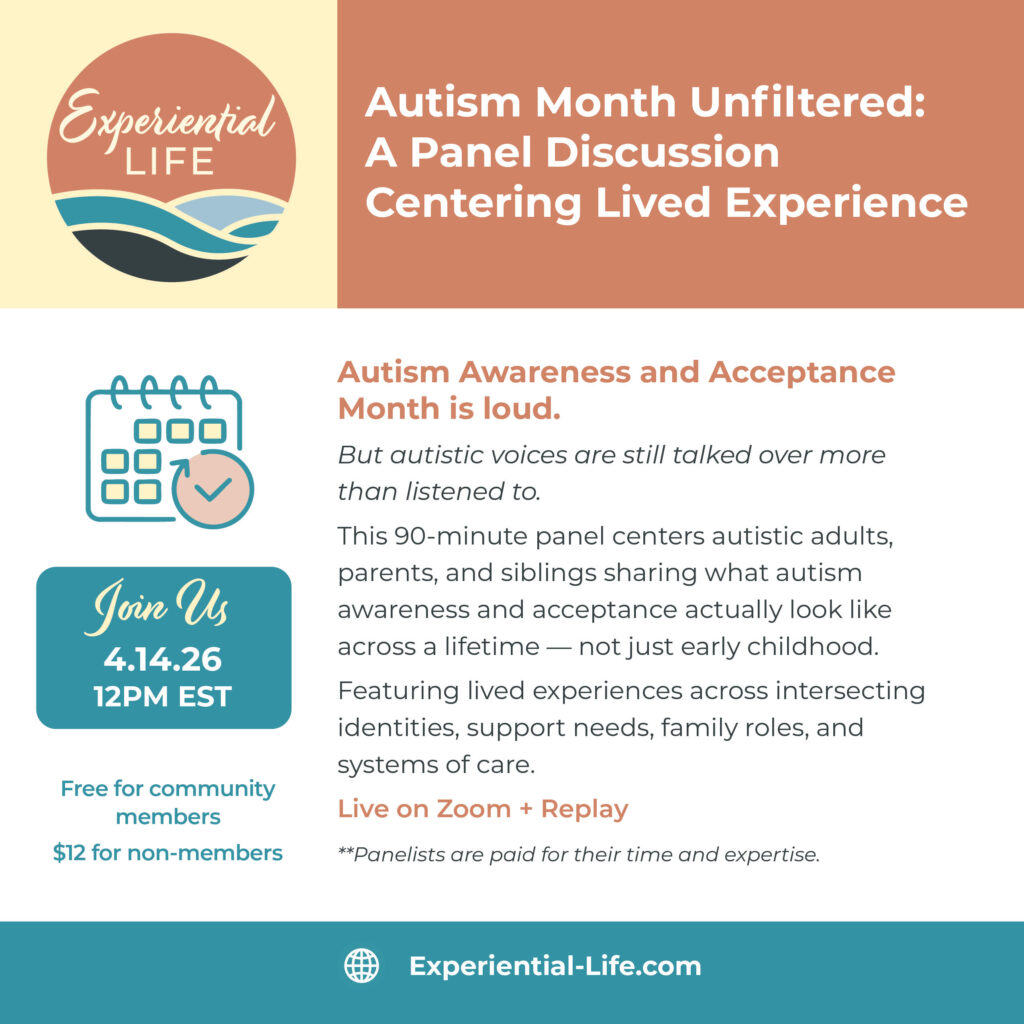
Autism Unfiltered was born out of a deep desire to make sure that the rhetoric doesn’t drown out those who are advocating every day to make sure our children have full and autonomous lives and are treated with dignity and respect.
Meet our panelists:
Christine Motokane: Christine is an early diagnosed moderate support needs autistic woman. She was mainstreamed in a general education classroom environment and got her BA in Psychology. She has written two books: The first one is “Working the Double Shift: A Young Woman’s journey with Autism” and “The Revolving Door: The Untold Story of Disability Support”. Currently, Christine works as a substitute paraeducator and enjoys the flexible schedule. You can follow Christine on Instagram: @TheJumpyAutist.
Alex Mock: Alex is a low support needs autistic woman who strives for equality no matter disability, race, gender etc. She works as a part time substitute teacher and DSP (Direct support professional). You can follow Alex on Instagram: @unbri_dled_whimsy
Dr. Destiny Huff: Dr. Destiny Huff is a non-attorney special education advocate, mental health therapist, late diagnosed AuDHD, and mom to two neurodivergent learners. Her mission is to support the mental health of disabled, neurodivergent, Autistic, and ADHD people. Those whose experiences are too often overlooked, misunderstood, or dismissed. You can follow Dr. Destiny Huff on Instagram: @destinyhuff_iep_advocate
And we purposefully invited a sibling panelist – because their experience often gets overlooked.
Vincenté Parker: Vincenté is a triplet – his brother is autistic and his sister has complex medical healthcare needs. He is a video producer for a health care organization by day, and spends his time volunteering as the coach for the Irrational Engineers, a robotics team based out of Capitol Heights, MD.
Here are a few things I want you to know about this panel discussion:
→ Everyone who sits on the panel is getting paid. Often we ask disabled people to share their time, experience, and expertise – but we don’t offer compensation. It’s exploitative and unfair.
→ Because the panelists are paid, I am charging anyone not a member of Experiential Life $12 to attend and receive the recorded panel discussion.
→ There will be time to answer questions at the end of the 90 minute event – but they must be submitted in advance. This gives our panelists time to think about their answer and respond in real time.
This event is open to anyone interested in hearing from the autistic community.
This space belongs to them. Anyone who treats it otherwise will be asked to leave.
I’m going to this conversation as a mom to an autistic teen that wants to hear directly from autistic people about how we can and should honor Autism Awareness and Acceptance Month.
If you are autistic, a family member, a caregiver, a provider, an advocate, or an ally – this is a conversation you don’t want to miss.
🗓 April 14, 2026
⏰ 12pm EST
📍 Live on Zoom
Register now to join us live ⬇️
All panelists are compensated for their time and expertise.
AND, if any of this resonates, please share this article with your network and subscribe to our weekly newsletter ⬇︎