You’re doing the work – searching, learning, advocating – because the system doesn’t just hand you answers. Get the answers you need now.
Experiential Life
One Place | Less Overwhelm | More Clarity

Why Planning For Your Disabled Child’s Future Isn’t A “Tomorrow Problem”
Waiver applications, benefits, and transition planning overwhelm families.
And too few people explain how the systems actually work.
I did exactly what every advocate and person that works for disability organizations told me to do…
When my autistic son turned 14, I applied through my state’s developmental disabilities administration for the Home and Community Based Services Waiver (HCBS).
✔️ I downloaded the plain language user’s guide.
✔️ Gathered all the documents.
✔️ Made all the copies.
✔️ Mailed them with return receipt.
And despite his higher support needs…
He was denied eligibility.
One Acronym Cost Me Six Months
The user’s guide said that a family could use their child’s IEP as proof of diagnosis.
It turns out, they did not mean the IEP document – they meant the psychological assessment from the IEP evaluation.
Silly me read IEP as stated and sent in the IEP – goals, parental input, and all.
One unclear instruction turned into six months of going back and forth with the administration.
And then it turned into years.
Not because the process required years.
But because I was so frustrated by the lack of clarity in the “plain language” guide that I delayed sending the psychological assessment they actually needed.
When “Future Planning” Overwhelms Your System
It just became too much.
And that’s the thing with future planning, right?
The future is a problem for future you – and you have today problems to solve…
Until the future is staring you in the face.
Literally.
Because your once forearm sized child is adult sized and can look you in the eyes without standing on their tiptoes.
Or in my case…
I am standing on tiptoes trying to look my autistic teen in the eyes.
The Systems No One Coordinates Or Even Teaches
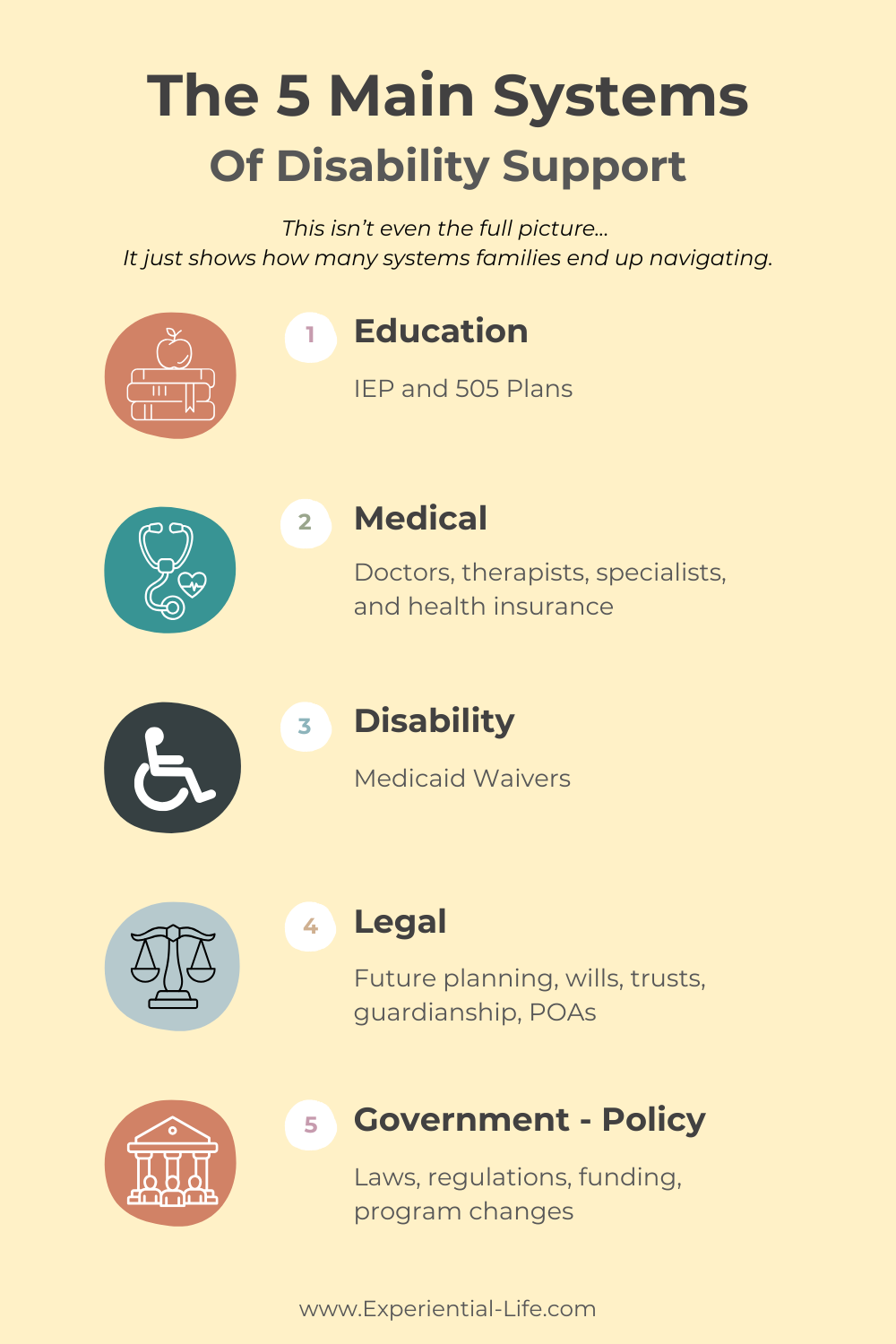
Future planning is overwhelming. And even with a “transition coordinator” there is no one that coordinates it all.
There seem to be a million steps.
A million systems you have to work with:
→ education
→ medical
→ disability
→ legal
→ government
What Families Raising Neurodivergent Kids Need
Most families are expected to figure out how these systems connect – on their own.
But what families raising neurodivergent children really need is clarity.
We need direction.
And we need to know what to do – and when to do it.
Especially if your neurodivergent child is entering middle school or high school.
Learning From People Who Have Been Here Before
The good news?
There is so much we can learn from the people who have already started or have gone through the process…
And that’s why I am really excited about our upcoming conversation with Eric Jorgensen, former Director of Special Projects at First Maryland Disability Trust and parent of a disabled adult.
Eric will walk us through practical strategies for planning your child’s long-term financial and life supports – and answer your questions live.
We’ll talk about:
- When families should start future planning
- The most common mistakes families make
- Financial and legal considerations for long-term support
- How to think about housing, benefits, and independence

You can join us for free:
🗓️ March 31, 2026
⏰ 12pm EST
📍 Live on Zoom
If you are staring the future in the eyes, but don’t know where to start, we scheduled this conversation for you.
Bring the questions you’ve been carrying alone.
The ones you don’t know who to ask.
Just click the button below to join us ⬇️
This is the conversation I wish I had – before my son turned 14.
If you’re not able to attend live, the replay lives inside the Experiential Life app.
You can learn more here: https://experiential-life.com/experiential-life-app/
AND, if any of this resonates, please share this with your network and subscribe to the newsletter to get instant access to future articles, weekly advocacy tips, exclusive event invites, and news you can use.