ABLE to Save for My Disabled Son
- by Christy
Will I Be ABLE To Save For My Disabled Son's Future?
The $2,000 asset limit for people on Medicaid and SSI is real – it’s been real since 1989.
And most families raising disabled kids don’t know how to begin saving – or if they can…
I have a running list.
Not a written one. The kind that lives in the back of your head and occasionally surfaces at 11pm when you’re trying to fall asleep.
Open ABLE account for my son.
It’s been on that list for a while.
Not because I don’t know what it is. I do. Not because I don’t understand why it matters. I understand that too.
It’s on the list because every time I get close to doing something about it, something else is more urgent.
A specialist appointment. An insurance appeal. A benefits review. A phone call I’ve been putting off making – for months.
And if I’m being fully honest – there’s another reason.
I didn’t think I could actually afford to fund it.
If you’re nodding right now, keep reading. Because I was wrong about that.
And the conversation we’re having on March 31st is the one that finally showed me why.
The Number Nobody Told Me About When My Son Was Diagnosed
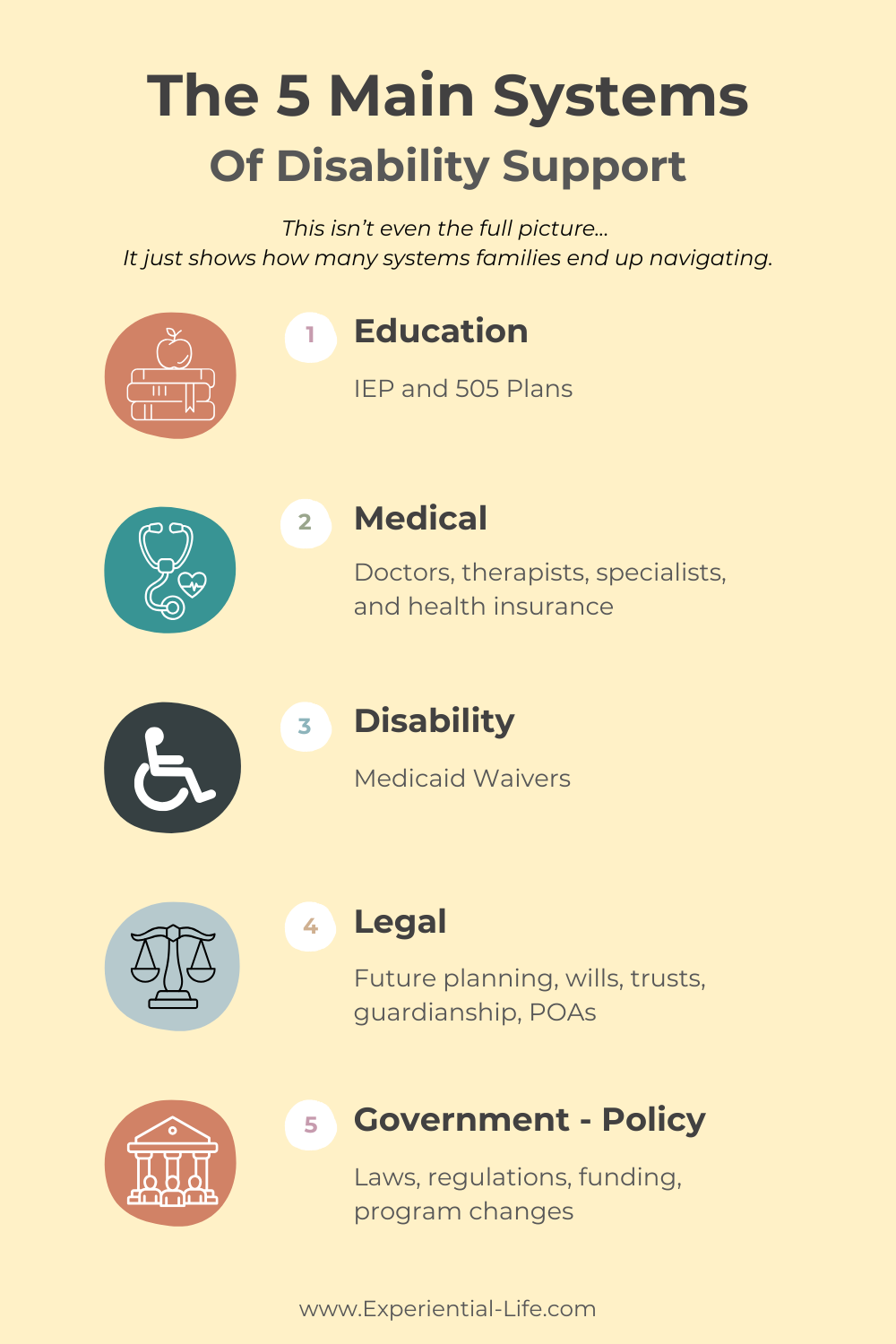
In 1989 – the year I was in second grade – the federal government set the asset limit for people receiving SSI at $2,000.
That means that saving for your disabled child is more complicated than it would be for a child who won’t need SSI or Medicaid benefits in the future…
Because you can’t just open a savings account in your disabled child’s name.
They cannot receive a gift or inheritance, over $2,000, in their name without risking their Medicaid, their SSI, and every support that depends on those benefits.
No one told me this when my son got his diagnosis.
I learned it by chance, the way you learn most things navigating disability systems – through conversations with other parents, through advocates, through sitting in enough rooms where people talked about money and benefits in the same breath.
And when it finally landed – really landed – my first thought wasn’t panic.
It was – how many families have no idea this is even a thing?
The Account You Should Know About Before It Is Too Late
The ABLE Act was signed into law in 2014.
It created a tax-advantaged savings account – similar to a 529 for education – specifically for people with disabilities.
Money in an ABLE account doesn’t count against the $2,000 SSI asset limit.
It can be used for qualified disability expenses:
✔️ housing,
✔️ transportation,
✔️ education,
✔️ health,
✔️ basic living expenses
As of this writing, eligible individuals can save up to $20,000 a year in an ABLE account.
It doesn’t fix the policy. The $2,000 limit is still there, still unchanged, still one of the most quietly harmful rules in the disability system.
But an ABLE account protects your child within it.
What If I'm Not ABLE To Save?
Here’s the thing about being a healthcare and disability advocate who helps other families navigate systems for a living.
You would think I’d have this handled.
I would like to tell you that I do.
I don’t.
The honest answer has two parts.
The first is bandwidth. Opening an ABLE account for my son has lived on my mental list the same way it lives on yours – not because it’s hard, not because I think it’s the wrong move, but because every time I get close, something more immediately on fire takes over.
That’s the thing about future planning. The future is a problem for future you, until it isn’t.
The second part is money. Or what I assumed about money.
I don’t have a lot of disposable income. Most of what I have goes directly to my son’s expenses – therapies, co-pays, equipment, the recurring costs that don’t stop just because the month is almost over.
The idea of finding additional money to put into a savings account, every month, reliably – it felt like one more impossible thing on an already impossible list.
So I kept putting it off.
And then I had a conversation with Kelly Nelson from Maryland ABLE that changed how I was thinking about it entirely.
What I Got Wrong About How This Works
I was thinking about an ABLE account like a traditional savings account. Something you fund with extra money you have left over at the end of the month.
Most of us raising disabled kids don’t have that. And the people who designed ABLE knew that.
Here’s what I didn’t understand until recently:
You don’t have to fund it from new money.
I’m already paying expenses for my son out of pocket every month. Recurring expenses – things I’m going to pay regardless. The ABLE account allows me to run those expenses through the account instead of directly out of my checking account. Same money. Different path.
And in Maryland, contributions to an ABLE account qualify for a state tax deduction – so the money I’m already spending on his care starts working a little harder.
Other people can contribute too.
ABLE accounts have gifting pages. Not a GoFundMe with platform fees taking a cut.
A dedicated page where family members, friends, and anyone who wants to support your child’s future can contribute directly to the account.
→ Birthdays.
→ Holidays.
→Graduations.
Instead of another toy or gift card, people who love your kid can contribute to something that actually builds over time.
It covers more than you think.
Basic living expenses. Housing. Transportation. Health. Education.
And – I just learned this from Kelly directly – in Maryland, an Experiential Life membership qualifies as a covered expense under ABLE.
Which means the app I built to help families navigate these exact systems can be funded through the account that protects your child’s benefits.
I want to be clear: I didn’t build the app knowing this. Kelly told me during our prep call and I sat with it for a minute.
Because that’s what good systems information does. It changes what’s possible.
What We're Covering On March 31st
I scheduled this conversation because I needed it.
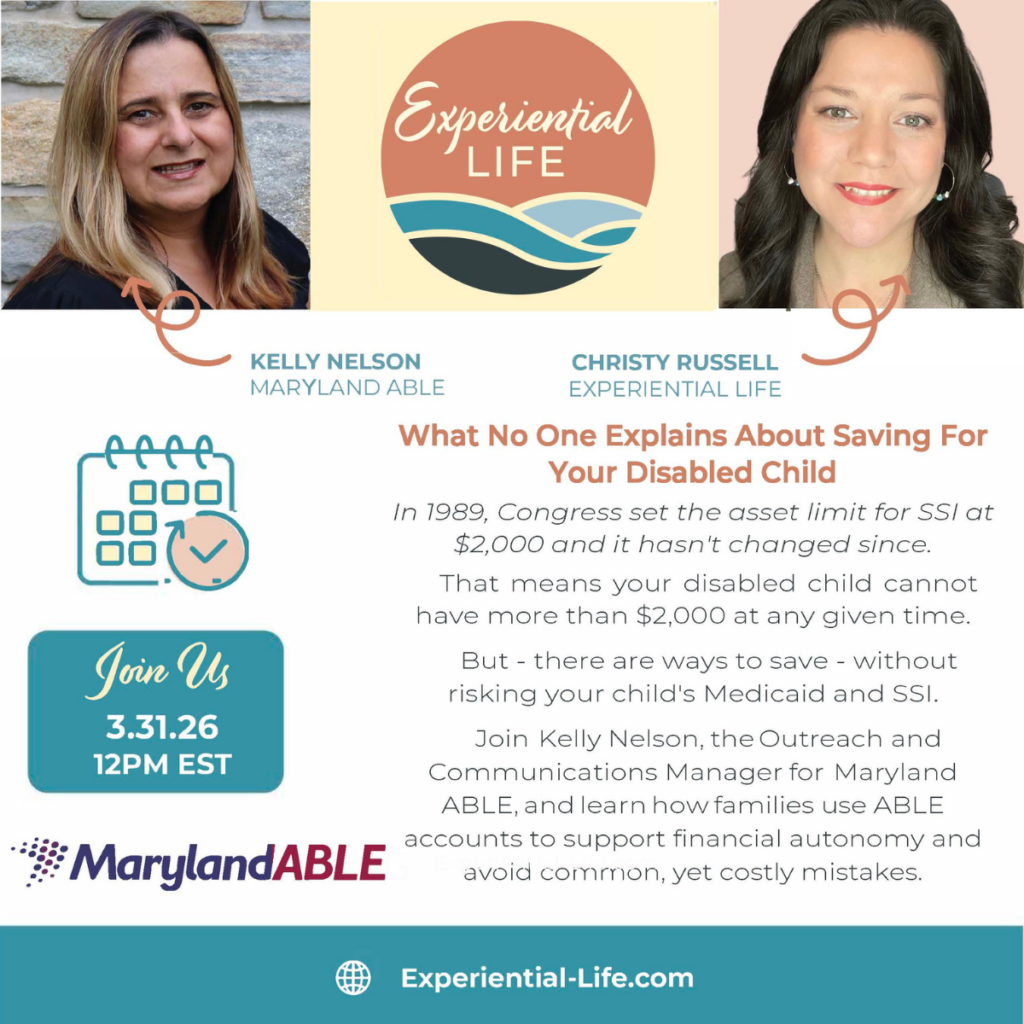
Kelly Nelson, the program and outreach coordinator for Maryland ABLE, is coming into the Experiential Life community to walk us through exactly how ABLE accounts work.
Not the pamphlet version. The version where you can ask your specific questions, about your child’s situation, changes to the federal rules, what happens if your child works or gets a gift or has savings you didn’t know were counted.
🗓️ March 31, 2026 at 12pm EST
📲 Replay included inside the Experiential Life App
👉 Register here
We’re covering:
✔️ How ABLE accounts work alongside SSI and Medicaid without triggering the asset limit
✔️ How to open one and what the process actually looks like
✔️ How to use recurring expenses you’re already paying to fund the account
✔️ How gifting pages work and how to set one up
I’m going to this conversation as a mom who needs to finally do the thing I’ve been putting off – and who now understands why waiting wasn’t actually protecting my budget. It was just delaying the protection my son deserves.
If you’re in the same place, come with me.
AND, if any of this resonates, please share this with your network and subscribe to the newsletter to get instant access to future articles, weekly advocacy tips, exclusive event invites, and news you can use.