
Month: May 2026

  • Finding Your Voice at the IEP Table: From Fights to Rights

    From Fights to Rights: Finding Your Voice at the IEP Table
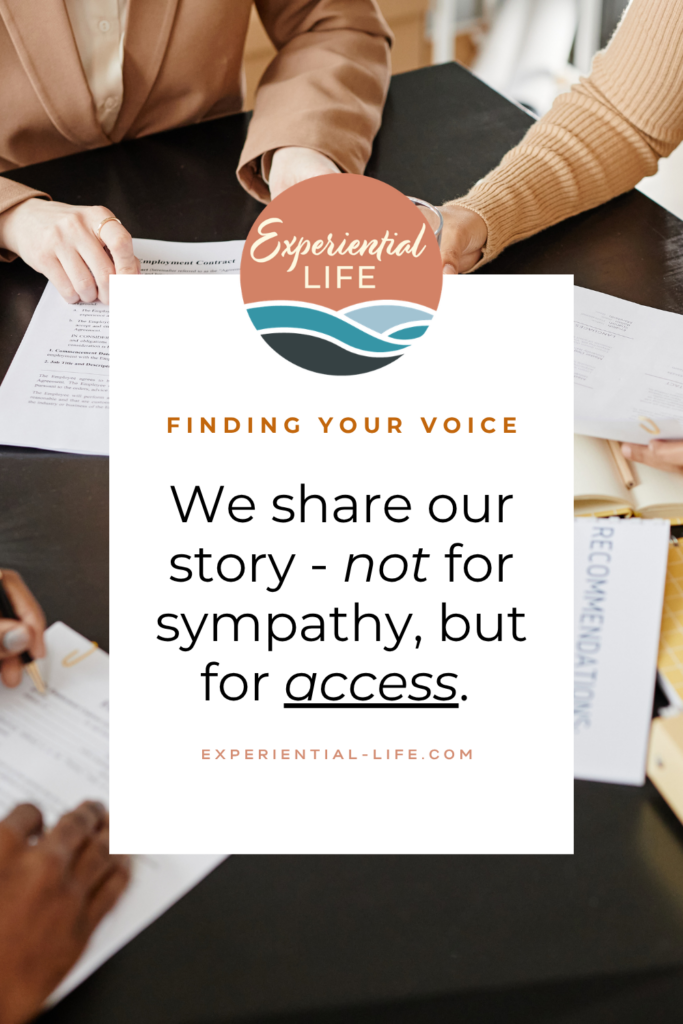
    In the background are hands of multiple races, leaning on a conference table with papers spread across it. The text reads, "Finding Your Voice - We share our story - not for sympathy, but for access."

    You’re told you have to fight…

    Fight for everything or you will get nothing.

    We gathered our arsenal.

    We had a special education teacher and a special education liaison from our district helping us prepare for the next IEP meeting.

    We were praised for having the forethought to NOT sign the IEP before fully understanding the implications. 

    The team was recommending C be placed in a self-contained special education classroom for Kindergarten – and it seems – for the remainder of his school career. 

    And while a self-contained classroom is sometimes the right choice, we felt very strongly that this placement was premature. 

    We decided the best way to know for sure was to tour the classroom – it took all of 5 minutes for my husband and I to give each other the telepathic message that “nope” this is not the right placement for our son.

    When Your Gut Screams "Nope"

    When we walked into the classroom, the lights were off.

    There was a group of maybe 10 children, some in wheelchairs, some on the floor, some in beanbags, others in chairs – all facing a projector screen with the circle time activity displayed on it.

    There was a teacher and 2 aides dispersed between the children.

    I looked up, and there was a child scaling the windowsill, as an aide held his hand, trying to coax him down.

    There was a bathroom inside the classroom – and the classroom was about as far away from the main entrance as possible.

    But don’t worry, the kids in this classroom dismiss earlier than the other kids to board their bus without the hustle and bustle of regular dismissal.

    Lunch and snacks – served inside the classroom.

    When do these kids get to be with the other kids – during assemblies mostly – but that depends on how the class is doing on that particular day.

    It was segregation disguised as support, and I hated it.

    They Checked a Box That Decided His Future
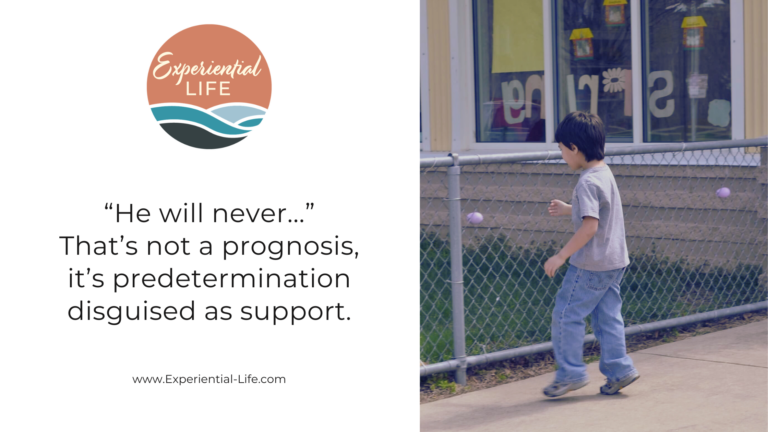
    Text reads: “He will never...” That’s not a prognosis, it’s predetermination disguised as support. To the right is a picture of C in his pre-k program, wearing jeans and a gray t-shirt. He is facing the fence of the playground, with his hand outstretched to retrieve a plastic egg from between the diamonds of the chain link fence.

    I got home and started writing emails like my son’s life depended on it… and in some ways, it did.

    Buried, in a tiny little box, in a sea of boxes and tables and words, were 2 check boxes:

    ◻︎ Diploma Track

    ◻︎ Certificate Track

    ☑︎ Certificate track was checked.

    I would have never noticed it, had our special education teacher friend not pointed it out.

    I would have never thought twice about it, had she not said, “it’s harder to go back to diploma track than it is to move to certificate track.

    But what did that mean??

    It meant that along with recommending C for the self-contained classroom, they were deciding – AT 5 YEARS OLD – that he would not be able to meet the requirements to graduate high school with a diploma.

    And friends – that broke me.

    I heard “he will never…”

    And I thought, “watch him…”

    I felt like they were forcing their “he will never…” narrative onto a child that was never given a chance to try.

    My heart was shattering – but my anger at the absurdity fueled action.

    From Begging for Inclusion to a Culture of Inclusion

    C’s special education preschool program was not at our neighborhood school.

    I volunteered in all my children’s classrooms weekly, so I got to know the principal of our neighborhood school, and I called her…

    Crying…

    And begged that she give my son a chance.

    Looking back it’s ridiculous.

    I had to beg for the school to give my son a chance to be included.

    Actually – I didn’t…

    Because the principal at our neighborhood school believed in inclusion – knew the meaning of Least Restrictive Environment – knew they couldn’t predetermine placement.

    I will never forget the call with her. Sitting at my desk, snot running down into my mouth, tears mixing with mascara and making my eyes burn.

    And her words – “Of course Mrs. Russell. Would it help if I attended the next IEP meeting?

    But first – I needed to come up with a strategy.

    Because they weren’t wrong in saying that C wasn’t ready for a full day of general education Kindergarten…

    He just shouldn’t be forced into a setting that would ultimately dictate his remaining 16 years of school.

    Strategy, Support, and Services - Oh My
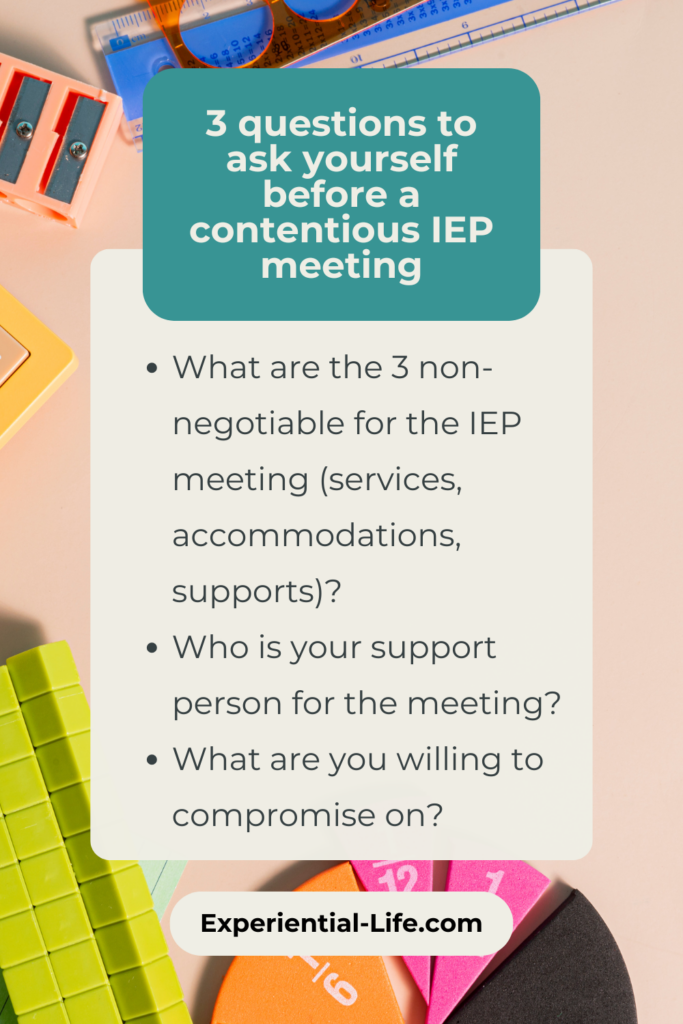
    I called my own “pre-meeting” with my advocate, and we wrote down the 3 things that I felt were most important to accomplish during the next IEP meeting:

    → Allow C to remain in the Pre-K program at his neighborhood school

    → Provide C with a 1:1 aide that could help with toileting

    → Give C a chance to learn beside non-disabled peers

    And then we scheduled the next IEP meeting.

    My district has a special education liaison that works with families – I believe it is unique to Maryland – but it’s called Partners For Success.

    They provide the tools and information necessary to empower parents to support their child’s educational program.

    And there are mixed reviews on the support this program provides, but it was literally what made our next IEP meeting successful for C.

    Because we walked into the meeting with my 3 non-negotiables.

    We had the support and participation of the principal from our neighborhood school.

    We just needed to hash out the details – what would C’s school day look like, and what services, supports, and accommodations would the school provide?

    And y’all, because C turned 5, technically he was eligible for a full day of school.

    But – the Pre-K program was only ½ day.

    We were prepared to just let it be – not push for a full day, because moving him to our neighborhood school, allowing him to be in a classroom of non-disabled peers felt more important.

    But our liaison said, “what if C could do the ½ day pre-K program, and have his aide move with him to the Kindergarten class in the afternoon for lunch, recess, and specials?

    And you know that sound of records scratching as if abruptly stopped – yeah, that sound played in everyone’s head.

    The principal at the school where C attended his special education preschool class said, “that’s never been done before – I don’t know that you could do that.

    And the principal of our neighborhood school said, “well – let’s talk it through real quick…

    And y’all…

    By the end of the meeting, we had officially moved C from the special education program to a general education program.

    With a 1:1 dedicated aide, who followed him for the duration of his entire day.

    With a hybrid ½ day pre-k and ½ kindergarten program designed just for him.

    No need for him to be toilet trained, thank you very much.

    No need for him to choose between being with his non-disabled peers or not.

    And the backing of a principal who believed in giving him a chance. 

    When Services Change, Telling Your Caregiving Story Matters

    Had I not shared our story with the principal from our neighborhood school, we would have either:

    – accepted defeat and the self-contained placement

    – fought – a timely and costly fight for our child to be in an inclusive classroom

    Our story has power. 

    Our advocacy has power.

    But only if you know how to leverage the power. 

    Some may call our experience luck…

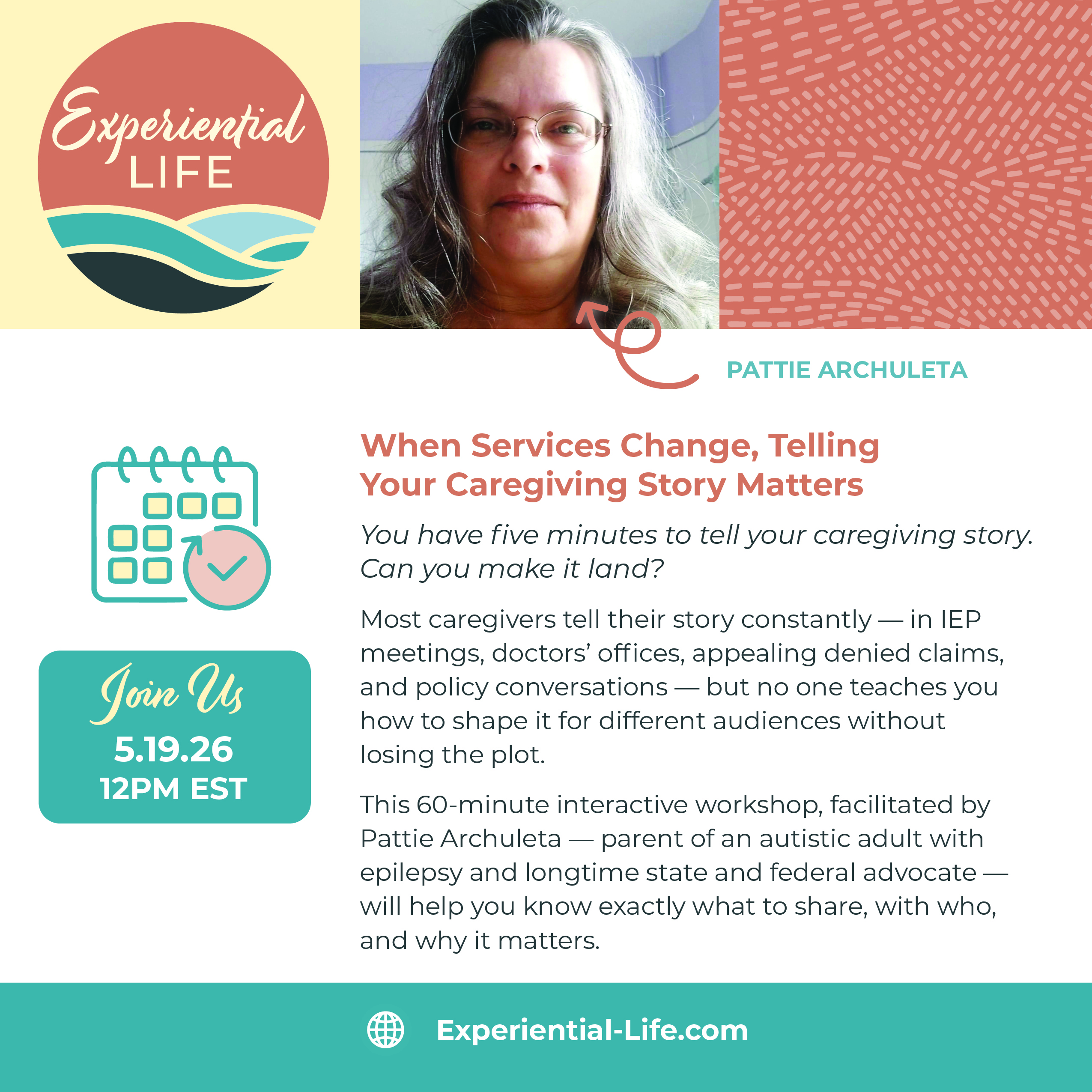
    Which is why we are bringing in long-time disability and healthcare advocate and mom to an autistic adult with epilepsy, Pattie Archuleta.
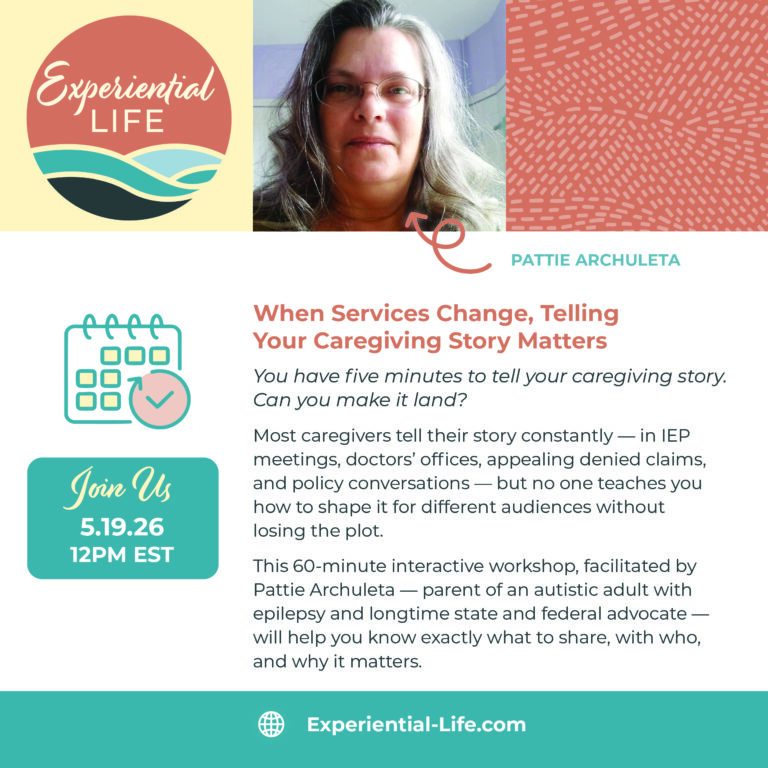
    She’s managed federal grants that support children and youth with special healthcare needs. 

    She knows how to turn what people think is luck into a repeatable advocacy skill. 

    Because you never know when you will need to leverage the power of your story to make sure your child gets a seat at the table, with the services, supports, and accommodations they need. 

    Join us

    🗓 Date: May 19, 2026

    ⏰ Time: 12pm EST

    ⏱ Length: 60 minutes (interactive)

    📍 Live on Zoom 

    AND, if any of this resonates, please share this article with your network and subscribe to the newsletter to get instant access to future articles, weekly advocacy tips, exclusive event invites, and news you can use.
    I built the newsletter I wish I had when my son was diagnosed.

    I know firsthand how lonely it can be raising a neurodivergent kid, trying to survive systems that are supposed to support us, and feeling like I'm a step behind or missing something important.

    Every week, I show up in your inbox with information you need right now, events you won't want to miss, and conversations that are perfectly paired with your favorite beverage and snack.

    I don't claim to know all the answers - but I do know where to find them, who can answer them, and make sure you do too.

      Join the hundreds of families and professionals that open the email every week.

      We won't send you spam. Unsubscribe at any time.

    • Finding Your Voice: From IEP Tables to Legislative Change

      Finding Your Voice:
      From IEP Tables to Legislative Change

      My voice shakes, I can feel the sweat dripping between my breasts, and my hands are visibly trembling.

      I clasp my hands together, take a deep breath, and share the story I’ve spent the last year sharing. 

      I never in a million years thought that sharing my story would put me on a panel with people who have way more letters behind their names than I do (my count is zero)…

      But I keep telling myself that those letters represent education – my lack of letters represent the years spent learning through experience.

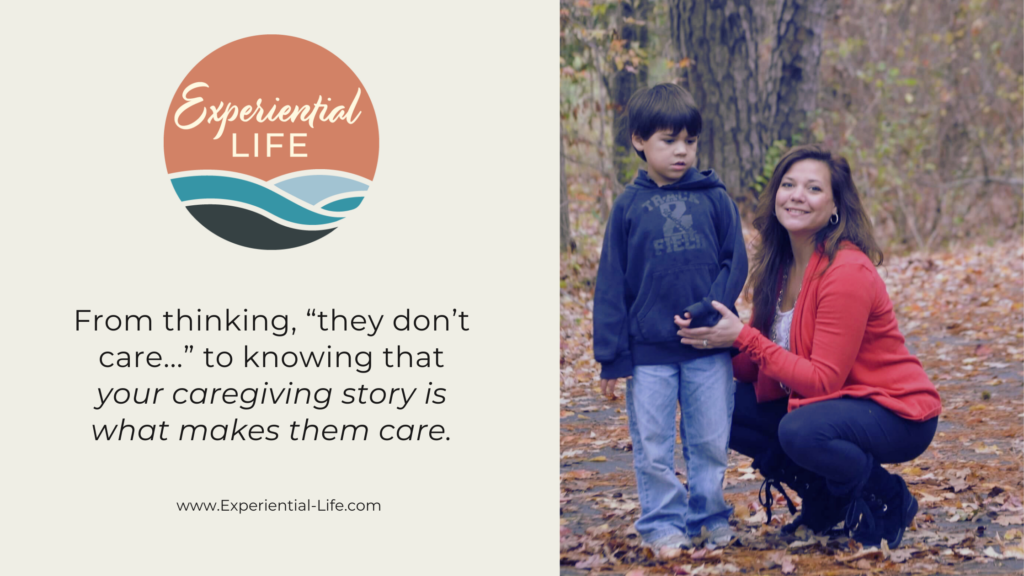
      Graphic reads, "From thinking, “they don’t care...” to knowing that your caregiving story is what makes them care." To the right is a picture of C standing on a paved path with fallen leaves surrounding him. He has short brown hair, a black hoodie, and jeans. Squatting beside him is Christy, wearing a red cardigan, black pants and a white shirt. Her long brown hair falls in waves over her shoulders.

      When C got his autism diagnosis, I fell into a dark place.

      I was sleep deprived, my sensory system was in overdrive, and I spent every free minute researching…

      Because surely I was missing something important. 

      Surely it wasn’t this hard for everyone – it was my failure as a mom, who lacked an advanced degree, and my young age that made me miss the obvious answer to making – waves hands around – all of this easier.

      The more I spoke, the more I collected stories of other moms like me – feeling completely inadequate, alone, and frustrated. 

      It’s a powerful combination…

      We are hard-wired to figure it out. 

      Failure is not an option. 

      Speaking - even when my voice shakes...

      It started small – at the IEP table – telling the team that, “No, we do not agree with your recommendation to put our 5 year old son in a self-contained classroom.

      We do not consent to switching him from a diploma track to a certificate track when even his same aged, typically developing peers struggle to tie their shoes, sit in their seats and “attend to a task for 5 minutes without redirection.

      When they also are more interested in the latest episode of Mickey Mouse Clubhouse than they are in learning why we capitalize the first letter of a sentence. 

      We shared what we did over the last three years to close the gap in knowledge and skills, the progress made, and what we envision for the future. 

      We proposed a new plan – one that met C where he was, and kicked the discussion of “self-contained classroom” down the curb… A discussion for another day. 

      We watched the IEP team push back, and ended with the team passing tissues around – because it wasn’t just our vision of our son’s future we laid out. 

      It was a vision for the culture of the school and how we can get creative to make sure it meaningfully includes all kids with disabilities.

      Graphic reads, "We need to share our story now more than ever... Because our kids deserve to grow up with (at minimum) the same rights and protections they were born with."

      I kept sharing my story.

      Because if I can convince a team of professionals in one school that we can support disabled kids and their families differently, then surely we can take that on the road and convince systems that inclusion is for everyone and costs less than exclusion. 

      I found myself sharing my story during a workgroup of professionals who work at the state level, who run disability organizations, who have the power to make change.  

      Handing families a pamphlet and calling it parent education, isn’t it,” I said. 

      We spend hours driving to multiple therapists, multiple specialists, multiple follow-ups per week. 

      I get calls from the school, no less than every other day. 

      We spent $30,000 in out of pocket medical expenses the year my son got diagnosed. 

      I have a stack of referrals to follow up on, sitting on the kitchen counter.

      I spend every spare minute trying to figure out how to make time in the week for everything everyone wants us to do – and then trying to figure out how to pay for it all. It is not sustainable.”

      From the IEP Table to Keynote Presentations

      My comments during the workgroup led to an invitation to be a keynote speaker at a small conference for parents of autistic kids. 

      I shared my story again – but this time, I laid out what I hoped the future would look like:

      Families getting more than a pamphlet and a stack of referrals to “help” them understand their child’s diagnosis.

      Instead, a chance to be heard. 

      Questions answered, for as long as it takes.

      Infrastructure and investment in support – rather than being forced to piecemeal a fragile support system together. 

      The more I shared the more I felt heard, supported, understood. 

      I tailored my story to fit the audience. 

      From sitting at the doctors office, to the IEP table, from speaking at conferences to meeting with legislators…

      The same story, shared in a multitude of ways – all with one goal:

      To get my son the services and supports he needs. 

      I went from thinking, “they don’t care…”

      To knowing that the story made them care. 

      Now We Need Everyone to Share Their Stories

      And that’s why I want to help you share your story. 

      Because in sharing our story – we reclaim power

      We sometimes have 90 seconds to explain to the doctor what we’re seeing and why it’s concerning. 

      Less than 5 minutes to tell the IEP team why the accommodation we’re requesting will make a fundamental difference in how our child accesses the curriculum. 

      We are sharing our story everyday, now it’s time to leverage it. 

      Not just at the doctor’s office or IEP table, but where our story makes the most long-term impact…

      With our elected officials who literally decide what rights, services, supports – access to the community – our kids’ have, and if they find our kids worthy enough to invest in. 

      We have 60 seconds to explain to them why it matters, and more importantly why it’s urgent right now.

      So we are bringing in long-time disability and healthcare advocate and mom to an autistic adult with epilepsy, Pattie Archuleta. 

      She’s managed federal grants that support children and youth with special healthcare needs. 

      She knows the value and impact our stories have and she’s leading a workshop so we can share our stories, even when our voice shakes, even when sweat drips down our chest, even when our hands tremble. 

      Because now is the moment to make sure our children grow up with (at minimum) the same rights and protections they were born with – and it’s all at stake right now. 

      Join us

      🗓 Date: May 19, 2026

      ⏰ Time: 12pm EST

      ⏱ Length: 60 minutes (interactive)

      📍 Live on Zoom 

      PSSST – it’s FREE to attend…

      But we do require registration so you can get the link to join us. 

      Just click the button below ⬇️

      If you’re not able to attend live, the replay lives inside the Experiential Life app.
      You can learn more here: https://experiential-life.com/experiential-life-app/

      AND, if any of this resonates, please share this with your network and subscribe to the newsletter to get instant access to future articles, weekly advocacy tips, exclusive event invites, and news you can use.
      Do you crave trustworthy information and resources to help you support your Neurodivergent child?

      Subscribe to the Experiential Life newsletter and get advocacy tips, exclusive event invites, and news you can use - delivered straight to your inbox.

        We won't send you spam. Unsubscribe at any time.