How to Talk About Sex With Your Neurodivergent Child
- by Christy
How to Talk About Puberty, Sex, and Consent With Your Neurodivergent Child (Without Making It Weird)
An honest guide for parents navigating “The Talk” – with empathy, clarity, and support.
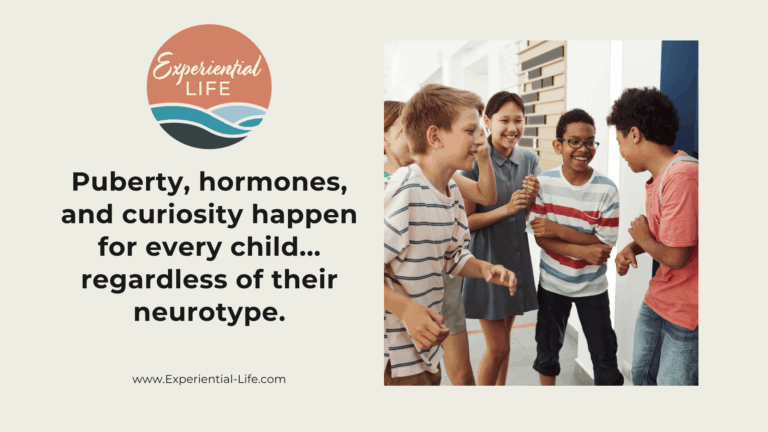
As it turns out, the smell coming from the backseat wasn’t a petrified Subway sandwich… it was puberty.
Ask me how I know 😅
First came the onion-meets-dirty-socks body odor that had me sniffing the air like a bloodhound.
Then I noticed the deeper voice, the rogue armpit hairs, the sleep schedule that made zero sense.
And then… the more subtle signs. You know the ones. (Not for public sharing – but if you’re a parent, you know.)
When my autistic son started showing interest in one of his female friends as more than a friend, I realized…
It was time.
Time for The Talk.
Why The Talk Feels Different When Your Child Is Neurodivergent
Here’s the thing – talking about relationships, consent, and sex is awkward for almost every parent.
It’s not a one-and-done convo. It’s a series of small, ongoing talks that build trust and comfort over time.
But when your child is neurodivergent, the stakes and the challenges feel higher:
👉 How do I explain this in a way they’ll actually understand?
👉 What if they never bring it up?
👉 What if I say too much… or not enough?
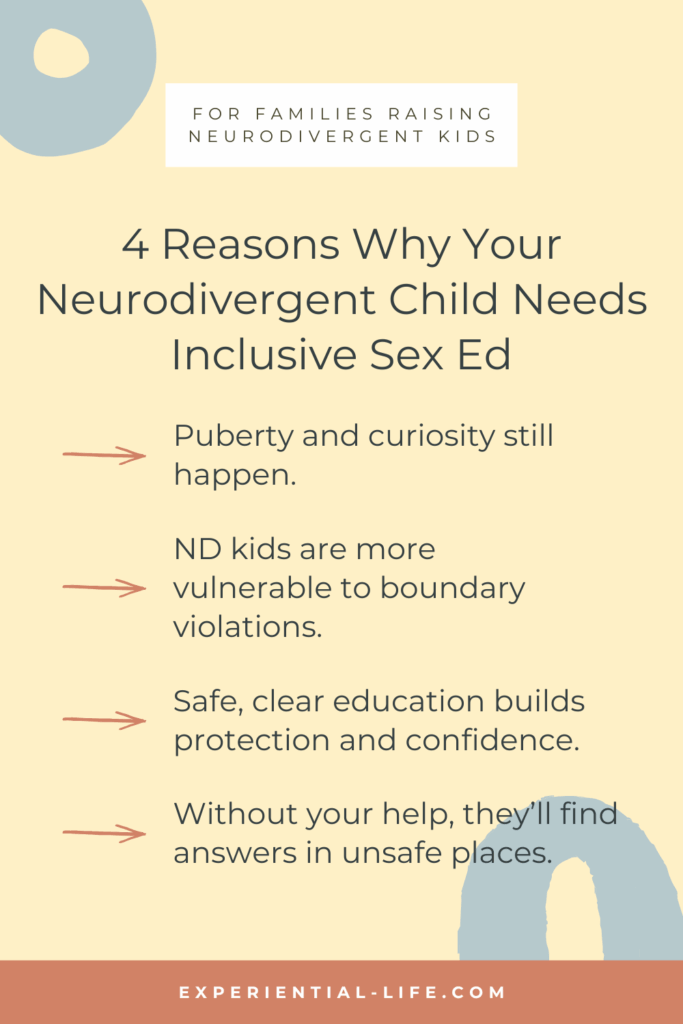
But here’s what’s even more important: if they don’t learn about bodies, boundaries, and relationships from you… they’ll learn it from the bus, the cafeteria, or Google. 😳
And for neurodivergent kids, that’s especially risky.
My Top 3 Tools for Teaching Puberty, Relationships, and Consent
I wasn’t ready for these conversations either – but these resources gave me the language, the confidence, and a place to start.
1. The Every Body Book of Consent
By Rachel E. Simon
This book is a must-have. It explores how consent applies far beyond sex – in family dynamics, friendships, identity, and self-respect. It’s warm, inclusive, and unpacks big topics like power, privacy, and gut feelings in a way that actually makes sense to young people.
I loved the original Every Body Book, and as soon as I saw this follow-up, I knew it was a must-have for our ongoing conversations about consent. It’s inclusive, affirming, and beautifully written.
2. Amaze.org
This site offers short, inclusive animated videos that are easy to understand and designed for a wide range of ages. They’re great for visual learners and feature neurodivergent and disabled characters – which is rare in sex ed content.
Pro tip: Watch a video together, then use the discussion prompts to keep the conversation going naturally.
3. You●ology: A Puberty Guide for EVERY Body
By Melisa Holmes, MD, Trish Hutchinson, MD, and Kathryn Lowe, MD
Written by pediatricians and grounded in science, this book uses six main characters to explain what’s happening in their bodies. It’s sensory-considerate and hilarious, which helps take the pressure off you having to get the “perfect” words right.
Still Nervous? That’s Why We Hosted the Webinar
Even with the right tools, this stuff can still feel hard.
That’s exactly why we created a real, honest conversation inside the Experiential Life App called:
“How to Talk About Sex (Even When It’s Awkward)”
Victoria Rodríguez-Roldán, J.D. is an autistic adult and Maryland’s Coordinator for State Autism Strategy. Together, we talk about how to approach these convos in a way that’s neuroaffirming, inclusive, and age-appropriate.
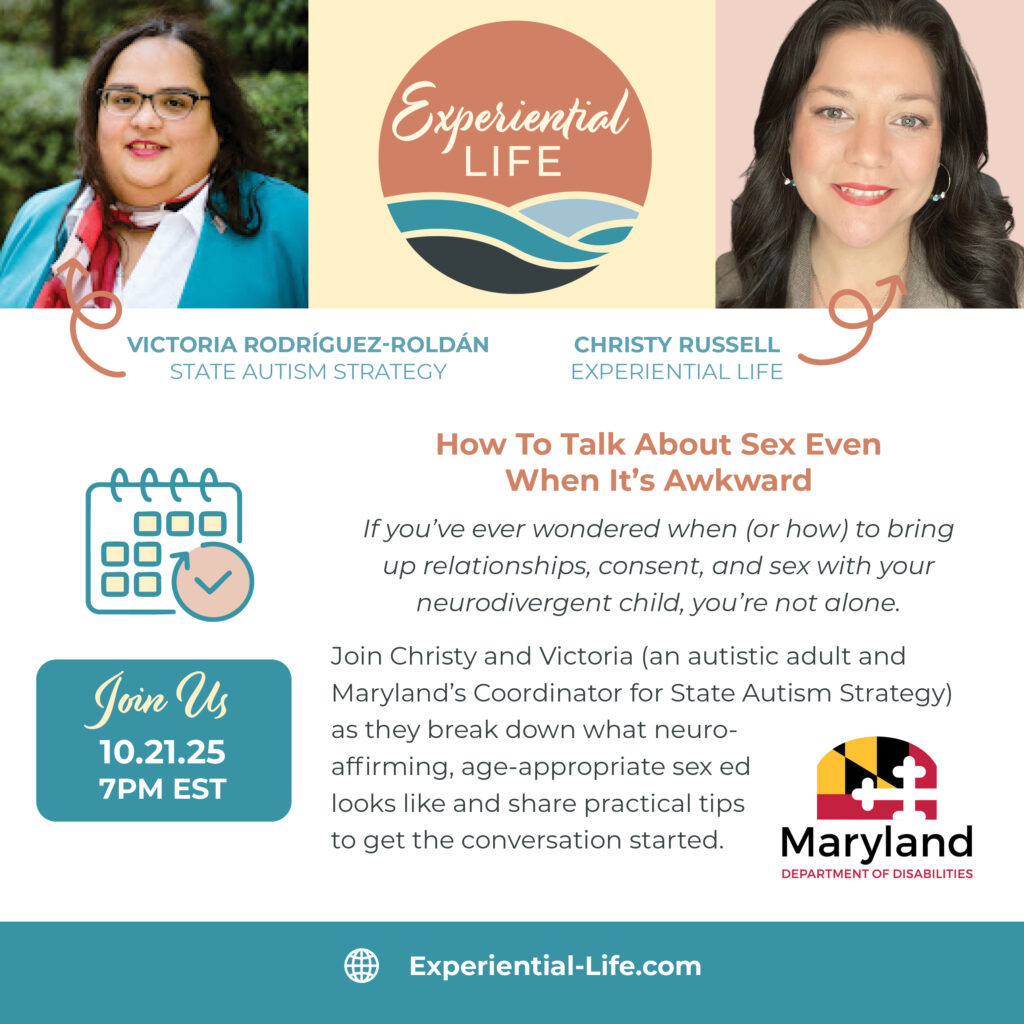
You’ll walk away knowing:
✅ What to say (and what not to say)
✅ How to start early, without overwhelm
✅ How to create ongoing, safe dialogue – not just a one-time “talk”
Your Next Step: Watch the Webinar Replay Inside the App
If you’re not yet part of the Experiential Life App, this is your sign to join. It’s a for-us-by-us platform designed to make life easier for neurodivergent families – a one-stop hub for real talk like this.
Inside, members can:
● Watch the full replay of How to Talk About Sex (Even When It’s Awkward)
● Access curated tools and parent resources
● Join a community of families who “get it”
Stop Googling, guessing, and avoiding the hard talks.
Watch the replay, feel equipped, and finally start the conversations that protect and empower your child.
AND, if any of this resonates, please share this article with your network and subscribe to the newsletter to get instant access to future articles, weekly advocacy tips, exclusive event invites, and news you can use.