The Hidden Problem With Disability Resources
- by Christy
The Hidden Problem With Disability Resources
($30,000 and a stack of referrals later)

Yesterday, our little island was issued a blizzard warning… and it reminded me of the day the pediatrician said, “Christy, I think your son is autistic.”
All those years ago, when the pediatrician dropped what felt like a bomb in my lap – we were ordered to evacuate because a hurricane was barreling toward us… and it felt like some sort of sign from the universe.
My brain screamed, “RUN” from all the chaos…
And in answer to the chaos surrounding me, I got a stack of referrals and a few pamphlets… in the midst of “ways to prepare for the incoming storm.”
Okay universe… I am paying attention.
Why Families Feel Like They Are Failing
That year, we spent $30,000 out of pocket seeing every specialist and therapist we got referred to.
I was juggling work, multiple appointments a week, two different schools, insurance calls, and two older kids with full lives of their own.
My husband was working nights. We were always in the car. Always coordinating. Always reacting.
And I broke.
Not because of my autistic son…
But because I felt like I was alone, in the middle of the storm, with information being thrown at me – decisions to be made – and yet no real and meaningful support behind me.
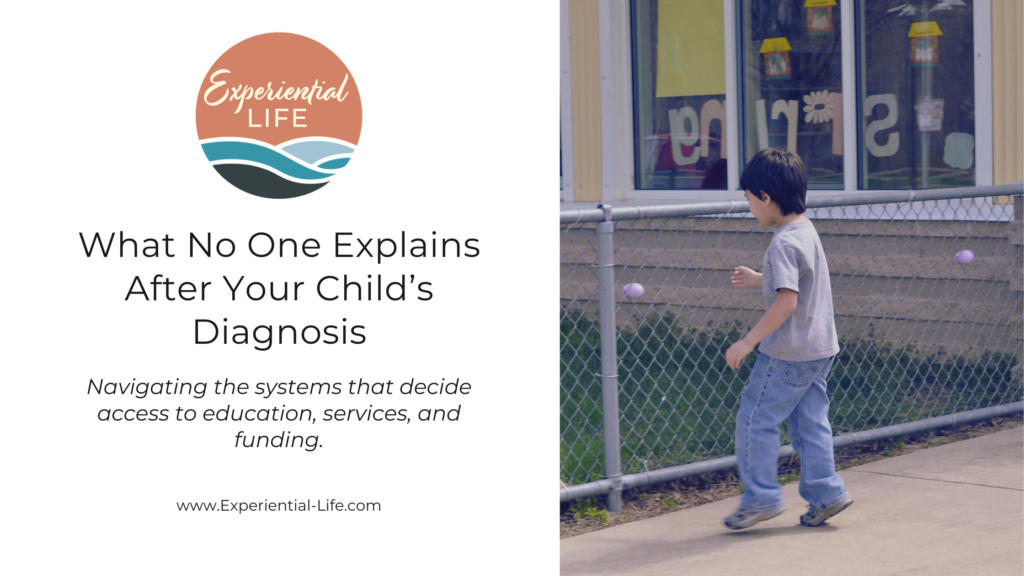
No one explained how the systems worked.
No one translated the language.
No one said, “This is hard to navigate… let me help.”
You Can’t Navigate What You Don’t Understand
So I started asking.
I sent cold emails. Made cold calls. Showed up to meetings. I wanted to know:
❓ What am I supposed to do?
❓ What do these acronyms and words actually mean?
❓ Is there help for the medical debt?
❓ How is anyone supposed to work 40 hours while caregiving 24/7?
The answers to most of my questions existed – but they didn’t live where I expected to find them…
They live in the heads of the people who work in the systems – which is bonkers!
Over the last decade, I’ve worked with more than 1,000 families and partnered with over 100 providers, professionals, agencies, and hospital systems.
I’ve managed federal and state funding, and sat inside the systems families are expected to navigate alone.
I learned how they work – from the inside.
Not from pamphlets.
Not from Facebook groups.
From the rooms where decisions are made.
And what I realized is this:
Families aren’t failing.
They’re navigating complex, siloed, and hard to understand systems.
Access Shouldn’t Depend On Luck, Word Of Mouth, Or Who You Meet
It’s been almost 15 years since my son’s diagnosis… and not much has changed.
2 years ago, I started hosting presentations from local disability organizations for my son’s inclusive theater group.
Afterward, parents kept coming up to me.
Thanking me.
Asking follow-up questions.
Writing names and taking numbers like they’d just been handed a lifeline.
Over and over, I heard the same sentence:
“How did I not know this existed?”
These weren’t new or exclusive organizations.
Families just didn’t know they existed – because you don’t know what to search for if you don’t know something exists.
That’s when it clicked.
Access to information, resources, and support depended on word of mouth, luck, and who happened to be in the room.
I couldn’t live with families’ access to support depending on who they know instead of what they need.
One Place. Less Overwhelm. More Support
This is what I wish someone had handed me instead of a stack of referrals.
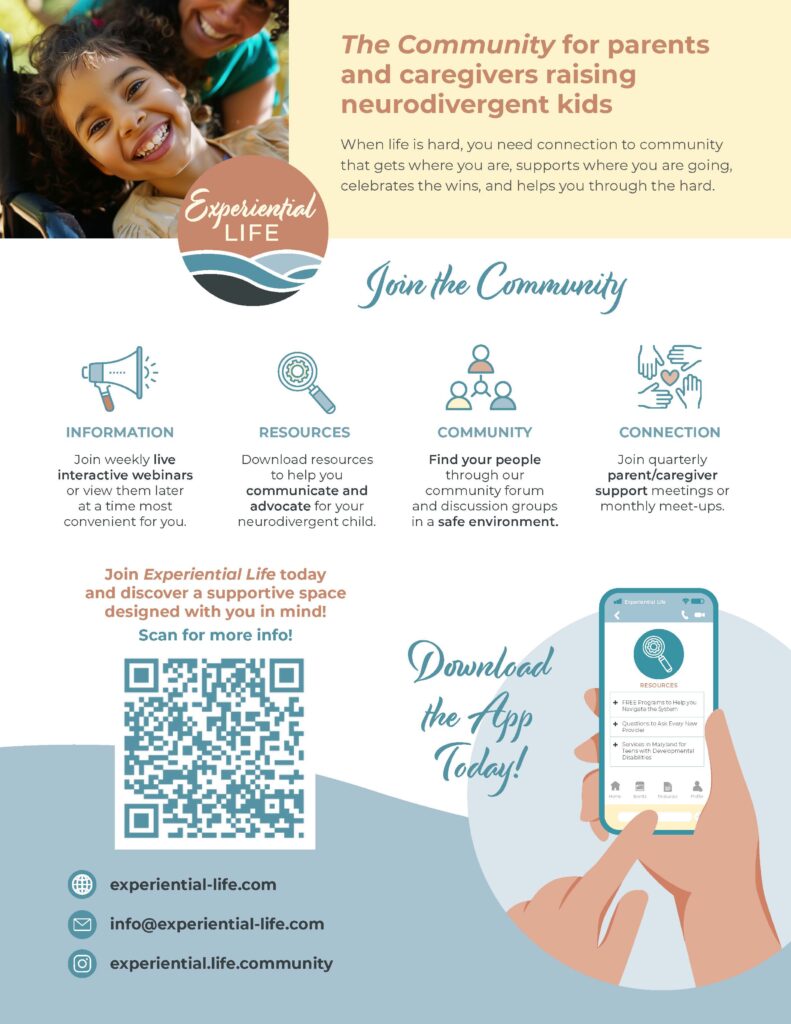
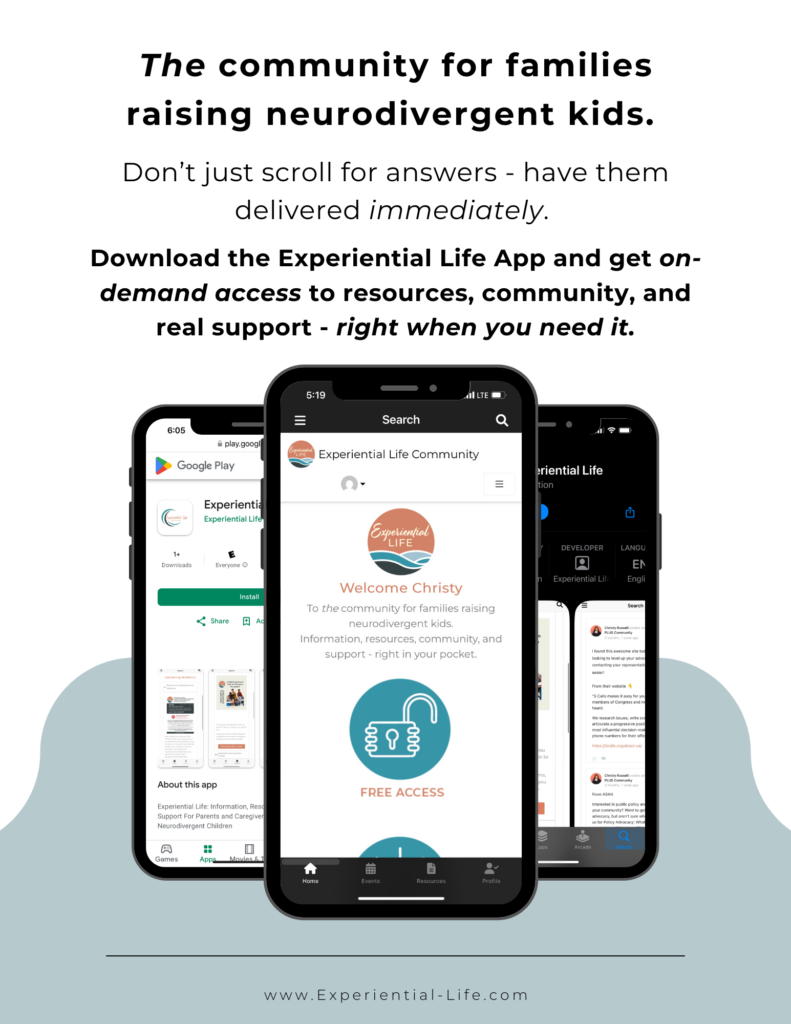
That’s why I built Experiential Life.
Not another stack of referrals.
Not another 40-tab research spiral.
A place where families go to:
→ Meet the people that work inside the systems – so you don’t have to search for them
→ Understand why the school won’t give your child more speech services, when the developmental pediatrician said they need more.
→ Get the words to say on the phone when insurance denies your request for therapy that will help your child buckle their seatbelt.
→ Stay up to date with policy and funding changes that happen every year
→ Be in a community that shares your struggles and understands why socks with seams are enemy number 1 in the morning rush.
We shouldn’t need to change careers to understand the systems.
We shouldn’t need honorary legal, medical, and educational degrees.
It should be easier to get support and services for our neurodivergent children.
If you’re tired of feeling like you were handed a stack of referrals in the middle of a hurricane, and told, “Godspeed,” this space was built for you.
AND, if any of this resonates, please share this article with your network and subscribe to the newsletter to get instant access to future articles, weekly advocacy tips, exclusive event invites, and news you can use.